
 EN
EN
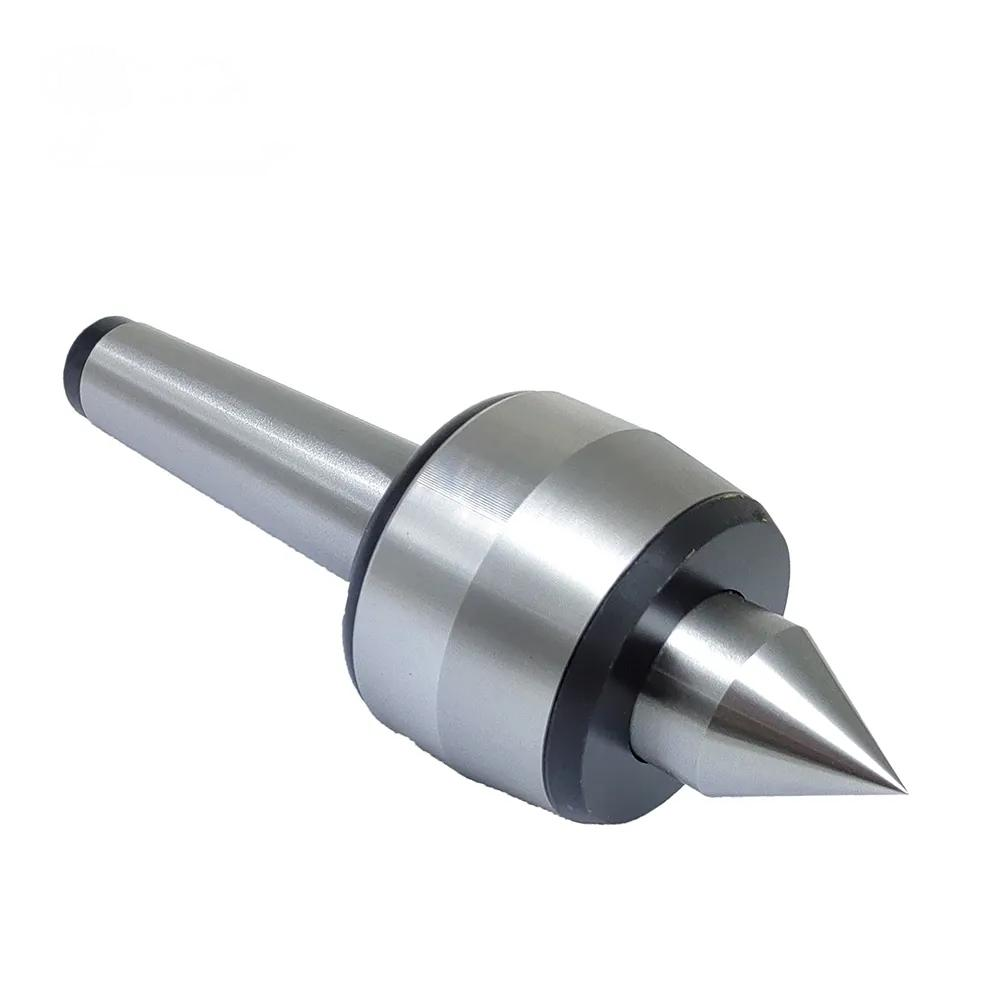
Understanding the Function and Mechanical Advantages of a Live Center
What is a live center and how does it function in lathe operations?
The live center serves as a spinning workholding tool installed into the tailstock of lathes, offering important support for those lengthy or thin workpieces that tend to bend easily. With bearings built right in, these centers spin along with the spindle itself, which helps cut down on annoying vibrations and stops the workpiece from bending out of shape during fast cutting speeds. For jobs involving things like airplane shafts or car parts, this kind of support really matters because just a tiny bit of flexing, sometimes as little as what shop talk refers to as "a hair's width," can throw off the whole dimensions of the finished part.
Key differences between live vs. dead centers in machining accuracy
Dead centers stay put and create heat from friction, whereas live centers actually spin along with whatever's being worked on. This rotation means they don't require continual lubrication and cause less heat buildup overall. According to research published last year, when working with aluminum, live centers produce a much smoother surface finish than dead centers do. The difference is pretty substantial too about two thirds better in fact. What makes this possible? Well, these rotating tools can keep things aligned within just under five micrometers of runout even when spinning at four thousand revolutions per minute.
How rotational support from a live center reduces workpiece deflection
A live center's rotating tip works against those pesky centrifugal forces that make thin walls or long parts want to bow out during machining. When this active torsional support kicks in at the tailstock end, it makes all the difference for machining jobs where the length compared to diameter gets pretty extreme. We're talking about workpieces with ratios going up to around 10:1, which is actually about four times what we can handle without this kind of support. The 60 degree precision ground tips on these centers spread out the clamping pressure so it doesn't concentrate in one spot. This even distribution cuts down on those annoying stress points that create tool marks and ultimately result in rejected parts from the shop floor.
Types of Live Centers and Their Role in Modern Precision Machining
Standard, heavy-duty, and adjustable live centers: matching types to tasks
When talking about live centers, there are basically three main factors to consider: how much weight they can take, their maximum operating speed, and whether they can be adapted for different jobs. For everyday work with metals such as steel or aluminum, the standard models usually come with just one bearing and those familiar 60 degree contact points. These will handle pretty decent weights too around 770 pounds before showing signs of stress. Then we get to the heavy duty ones which really step things up a notch. They pack in triple bearings made from tough alloy steel so they can tackle over 1,100 pounds of radial force. Machinists love these when working on big shafts where deep cuts need to happen fast. And let's not forget the adjustable variants either. With movable tips and several bearings built in, these babies shine when dealing with weird shapes or massive parts that just won't fit right on regular setups. Shops that deal with custom orders find them absolutely indispensable for keeping production running smoothly through all sorts of challenging projects.
| Type | Key Features | Ideal Applications |
|---|---|---|
| Standard | 60° point, single bearing | General turning, short runs |
| Heavy-Duty | Triple bearings, hardened steel | Large shafts, heavy cuts |
| Adjustable | Positionable tip, multiple bearings | Custom geometries, repairs |
High-speed live centers for CNC lathe environments
High speed live centers made for CNC lathes can handle speeds from around 2,500 to 3,000 RPM pretty well. Some models even go as high as 10,000 RPM when they have those special ceramic bearings inside. The sealing system keeps coolant from getting where it shouldn't, which is important during machining operations. These tools also feature cones that are ground with extreme accuracy and materials that don't expand much when heated, resulting in runout measurements below 0.0003 inches even after long periods of work. An interesting detail worth noting is that dustproof front seals actually make these bearings last about 37 percent longer in environments where there's lots of coolant flying around compared to regular versions without this protection.
Improving surface finish with precision-ground live centers
Live centers that are precision ground help create those really fine surface finishes we often see under 16 microinch Ra. They do this because they cut down on radial deflection when making those final finishing cuts. Most have these tapered connections, usually MT2 or MT3 sizes, which can get down to about .0001 inch concentricity if matched right with the tailstock taper. According to a study from AMT back in 2022, this kind of setup actually lowers chatter by nearly 30 percent when working with thin wall titanium parts. And let's not forget those micro polished surfaces either. These special finishes really cut down on friction and stop heat from building up so much, which means our workpieces stay dimensionally stable throughout the whole process.
Enhancing Productivity with Live Center Integration in Multitasking Lathes
Synergy Between Live Tooling and Live Centers in Multitasking Lathes
In multitasking lathes, live centers work in tandem with motorized tooling to maximize efficiency. The synchronized rotation of the live center maintains workpiece alignment during simultaneous milling or drilling operations. This integration reduces vibration by 22% compared to static workholding methods, enabling high-speed machining of complex geometries without sacrificing precision.
Enabling Off-Center Milling and Drilling Without Secondary Setups
When live centers spin along with the spindle, they make it possible to machine those tricky off-center features all in one go. This means drill bits and end mills get to work on different angles of the part without having to stop and refix everything. A big name in aerospace actually cut down their setup changes by around two thirds. They hit an amazing 0.005mm precision for fuel system parts because of this. That kind of accuracy really matters when dealing with critical components where even tiny deviations could cause problems later on.
Data Point: 37% Reduction in Cycle Time When Live Centers Support Live Tooling (AMT, 2022)
According to a 2022 report from the Association for Manufacturing Technology, combining live centers with powered tool stations can significantly cut down on machining time because it allows for continuous operation. When using this setup, machine operators don't have to stop cutting when the spindle reverses or when changing tools, which means no wasted time waiting around. The results are pretty impressive too. When applied to 316L stainless steel shafts, manufacturers saw their average cycle time drop dramatically from nearly 47 minutes all the way down to just under 30 minutes. Plus, there was an 18% improvement in surface finish quality measured as Ra values. These kinds of gains make a real difference in production efficiency for shops working with tough materials like stainless steel.
Best Practices for Selecting and Installing Live Centers for Optimal Performance
Load capacity, speed rating, and taper compatibility considerations
Getting the correct live center involves checking three main factors: load capacity, speed rating, and taper type against what's needed for the job. The heavy duty versions can handle radial loads above 1800 pounds or 8 kilonewtons, and they maintain runout below 0.003 mm which is really important when working with aerospace quality titanium parts. Regular centers usually work fine at speeds around 2500 revolutions per minute, but there are also special high speed options equipped with ceramic bearings that push things up to 10,000 RPM. Don't forget to check if the taper matches properly MT2 through MT5 range by using those NIST traceable plug gauges available from most tool suppliers. This simple step prevents problems like misalignment issues and unwanted vibrations during operation that could ruin precision work.
Matching live center geometry to workpiece length and material stiffness
Extended-nose live centers offer 20�30% better support for slender shafts (L/D > 6:1). For soft materials like aluminum, carbide-tipped centers prevent galling; for hardened steels, robust 60° carbide inserts are preferred. Nose angle selection should reflect material stiffness. Blunt angles (75°) provide superior stabilization for thin-walled tubing compared to sharper 60° profiles.
MT2 vs. MT3 taper prevalence in high-precision workshops: A practical comparison
According to a 2023 survey by the Precision Machining Association, 68% of high-precision shops now standardize on MT3 tapers due to their 30% higher torsional rigidity compared to MT2. While MT2 remains common in bench lathes and prototyping, MT3 dominates in production CNC environments involving hardened steels and high-RPM operations.
| Taper Type | Morse Number | Max RPM | Common Applications |
|---|---|---|---|
| MT2 | #2 | 4,000 | Bench lathes, small prototypes |
| MT3 | #3 | 6,500 | Production CNC, hardened steels |
Best practices for alignment and runout minimization during installation
Let those live centers and tailstocks sit around for about 15 minutes first so they can reach thermal stability before starting any setup work. This helps cut down on expansion errors later on. When checking alignment, grab some test bars along with dial indicators that offer roughly 0.001 inch per 25.4 mm resolution. Aim for less than 0.002 mm total indicator runout. Speaking from experience, folks who switch to preload adjustments with Belleville washers instead of regular nuts see a pretty significant improvement. Studies indicate these washers slash axial play by nearly half during those tough heavy cutting jobs where every bit counts.
Live Center vs. Lathe Chuck: Complementary Roles in Workholding Stability
Role of the Lathe Chuck in Clamping Versus Live Center in Tailstock Support
When working with lathes, there are two main components that hold everything together: lathe chucks and live centers. The chuck sits right at the headstock and does most of the heavy lifting when it comes to gripping materials, whether we're talking about rough stock or something already shaped. Then we have the live center which goes into the tailstock. This part provides essential rotational support and helps fight off any unwanted bending or twisting forces acting on the material. Put them together and what do we get? A pretty good balance for machining operations. The chuck keeps things from moving along the axis, while the live center holds down that far end using those specially ground bearings that spin right along with whatever we're working on. This setup makes all the difference in maintaining accuracy during longer cuts or when dealing with heavier workpieces.
Maximizing Rigidity in Slender Shaft Machining Through Combined Use
When working with thin parts like those found in aircraft hydraulics or car drivetrains, pairing a standard chuck with a live center cuts down vibrations significantly compared to just using a chuck alone. Some tests show reductions around 50% or so. The chuck holds things steady at one end, whereas the live center spreads out the cutting pressure across its tapered tip. This combination makes all the difference when it comes to getting really tight specs. Parts that are both long and narrow need this kind of support to hit those super precise measurements we're talking about here. With this setup, manufacturers can achieve tolerances down to plus or minus 0.001 inch instead of settling for the looser 0.005 inch range that's common otherwise.
Trend: Increasing Adoption of Hydraulic Chucks Paired With Sealed Live Centers
These days, many machine shops are combining hydraulic chucks (which provide about 15 to 20 percent better grip consistency compared to old fashioned manual ones) with high speed sealed live centers capable of handling over 10 thousand RPM. Top equipment makers have started developing complete setups where the actual clamping force gets tweaked automatically depending on what those load sensors detect at the live center point. The result? Shops report around 38% fewer annoying chatter marks when working on tough materials such as titanium parts. This kind of smart integration makes a real difference in production quality for shops dealing with precision work all day long.
Table of Contents
- Understanding the Function and Mechanical Advantages of a Live Center
- Types of Live Centers and Their Role in Modern Precision Machining
- Enhancing Productivity with Live Center Integration in Multitasking Lathes
- Best Practices for Selecting and Installing Live Centers for Optimal Performance
- Live Center vs. Lathe Chuck: Complementary Roles in Workholding Stability