
 EN
EN
The Core Role of Dial Indicators in Machining Quality Control
How Dial Indicators Enable Real-Time Measurement and Immediate Error Detection on the Shop Floor
Dial indicators give machinists quick and accurate readings when working on parts, able to spot tiny variations down to 0.0005 inches. With this kind of real time info, workers can catch issues like worn tools, alignment problems, or faulty workpieces right away instead of waiting until after production for checks. Some research from 2024 looked at around 120 different machine shops and discovered something interesting: those who monitored their processes with active dial indicators saw a drop in rework expenses by about 32 percent compared to shops that only did tests in batches. These old school analog devices provide steady physical feedback too, which means machinists can tweak things on the fly before mistakes start adding up. This becomes really important when dealing with complex multi axis CNC milling where even minor errors can cause big problems later on.
Integration of Dial Indicators Into Standard QC Workflows for Consistent Output Verification
Top manufacturers integrate dial indicators into structured quality control workflows to ensure dimensional consistency across production runs. A standardized approach includes:
- Pre-shop floor calibration: Zero-point verification against master gauges
- In-process checks: Tool alignment and depth validation during operation
- Post-production audits: Final part runout and concentricity testing
This three-phase system establishes a closed-loop verification process. Facilities following this protocol report first-pass yield rates of 98.7% (Precision Machining Quarterly 2023), demonstrating that mechanical indicators remain effective even in digitally advanced manufacturing settings when systematically applied.
Case Study: Measurable Reduction in Defect Rates After Implementing Dial Indicator Checks in CNC Operations
A midwestern aerospace supplier reduced machining defects by 42% within eight months after implementing scheduled dial indicator validations. The initiative combined analog measurement with digital record-keeping to meet AS9100 standards while maintaining a 12-second per-check cycle time. Key interventions included:
| Intervention | Frequency | Defect Reduction |
|---|---|---|
| Spindle alignment checks | Per shift | 28% |
| Fixture positioning audits | Hourly | 39% |
| Post-cut surface scans | Every 10 units | 51% |
The results confirmed that dial indicators offer both precision and efficiency, making them ideal for high-compliance, high-volume CNC environments.
How Dial Indicators Work: Key Components and Mechanical Precision
Breakdown of Internal Components – Plunger, Gear Train, and Dial Face – and Their Role in Accuracy
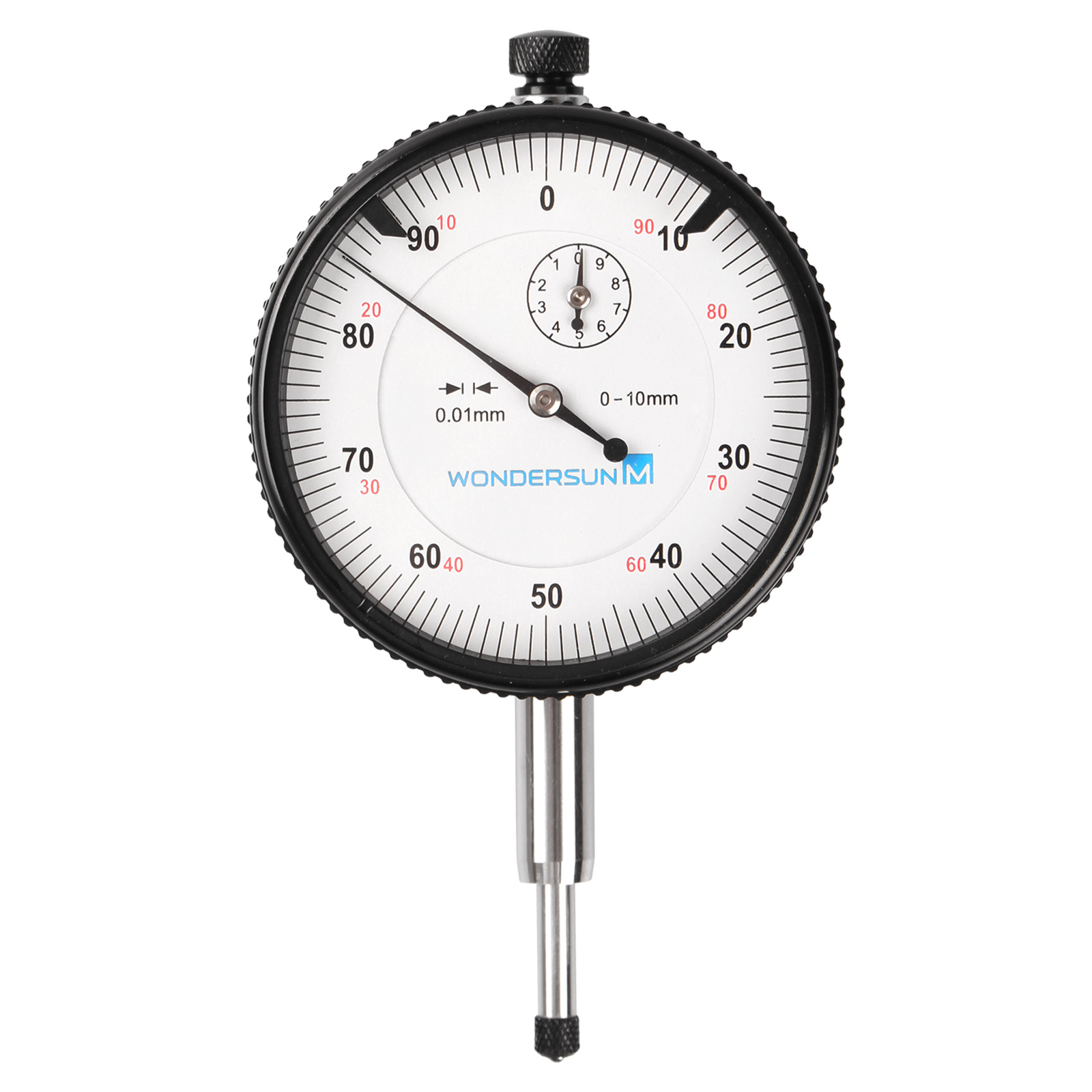
All dial indicators depend on carefully designed mechanical systems inside them. When someone presses against the spring loaded plunger, it senses how far something has moved in a straight line. This movement gets transferred through what's usually called a rack and pinion setup. The gears then turn these tiny motions into bigger rotations. Most indicators can amplify movement by about 1,000 times what they actually detect. On the face of the dial, there are markings so precise they show changes down to 0.0005 inches. That means operators can spot differences as small as half a thousandth of an inch when measuring parts.
This design ensures repeatability within ±0.0003", meeting ISO 9493:2024 standards, even under high-vibration conditions. Unlike digital sensors vulnerable to electromagnetic interference, the purely mechanical operation provides uninterrupted reliability during critical tasks like spindle alignment or surface plate verification.
Understanding Mechanical Amplification and Analog Feedback in Dial Indicator Operation
Mechanical amplification makes microscopic variations visible through needle deflection. A standard 10:1 gear reduction paired with a 100-division dial achieves 0.001" resolution—sufficient for most industrial applications such as press-fit bearing installations. High-precision models use multi-stage gearing to reach sensitivities down to 0.00005", essential for aerospace-grade inspections.
The old school analog feedback gives workers this constant feel for where things are in space something digital screens just cant match. When aligning a lathe chuck, watching that needle glide across the dial tells the operator exactly which way to tweak things without having to stare at numbers blinking on a screen. Shop floor tests show these analog gauges cut down setup times around 23 percent versus those fancy digital probes according to Machinery Handbook from last year. Plus there's no worrying about dead batteries or delayed signals messing up production when the machine needs attention most.
Achieving High Accuracy in Machining with Dial Indicator Measurements
Resolution Analysis: .001" vs. .0005" Graduations and Their Impact on Precision Outcomes
Micron level accuracy is possible with dial indicators thanks to their calibrated graduations. The market offers two main scale options: .001 inch and .0005 inch, each suited for specific tasks. Most shops working with general tolerances around plus or minus .005 inches find that the .001 inch graduation strikes just the right balance between quick measurements and good enough precision when checking flat surfaces or parallel parts. Things get really interesting in specialized fields though. Aerospace companies and medical device manufacturers often need those super fine .0005 inch graduations to hit those tight plus or minus .002 inch specs. According to recent research from Precision Machining Journal published last year, these finer markings actually cut down on interpolation errors by about 43%, which makes all the difference in high stakes applications where even tiny measurement discrepancies matter.
Repeatability and Reliability of Dial Indicators Under Continuous Industrial Use
The Mitutoyo metrology lab ran tests showing industrial grade dial indicators featuring hardened steel gears can maintain around plus or minus 0.0003 inch repeatability after making 10 thousand measurements. These instruments stand up well to tough workshop conditions because they're built solidly. Most machinists actually prefer them over digital probes when working in messy environments. According to a recent survey, about 9 out of 10 machinists say they get fewer bad readings from traditional dials compared to digital versions on shop floors soaked with coolant or covered in dust (Manufacturing Quality Survey 2024). This makes sense for shops running non-stop production lines where consistent results matter most.
Analog vs. Digital: Evaluating If Dial Indicators Remain Competitive Against Electronic Probes
Digital probes definitely have their place when it comes to recording data and connecting to systems, but there's something about those old school dial indicators that just can't be beat when workers need to see and feel what's going on right away. Shop floor technicians tend to fix alignment problems about 27 percent quicker with those spinning needles because they don't have to wait for screens to update like with digital tools. When talking about really tight tolerances below .001 inch, most quality control folks (we're looking at around 78%) still insist on seeing those dials before signing off on parts. They love how these mechanical gauges aren't affected by electromagnetic interference and won't leave them hanging when the battery dies during critical measurements.
Practical Applications of Dial Indicators in Machine Setup and Inspection
Alignment, Centering, and Runout Verification During Machine and Workpiece Setup
Dial indicators play a really important role in setting up machines properly. These tools can spot misalignments as small as 0.0005 inches, which matters a lot for precision work. When checking spindle runout, they help avoid those annoying surface defects caused by vibrations. Plus, when attached to magnetic bases, dial indicators make sure everything is centered correctly so workpieces line up perfectly with the machine's axes. Shops that have started incorporating these indicators into their CNC setup routines report cutting down on setup time by around 15 to 20 percent. This kind of efficiency boost is why many manufacturers in fields requiring tight tolerances, such as aerospace production, now consider dial indicators essential equipment for their workshops.
Inspecting Geometric Tolerances and Surface Conformity in Post-Machining Quality Checks
When parts come off the machine, dial indicators check for flatness, how round things are (concentricity), and those tiny waves on surfaces that matter when trying to get finishes under Ra 0.8 microns. Some research from last year in a real toolroom showed something interesting about these old school dials. They caught around 93% of bad cylindrical parts that were outside tolerance specs, actually working better than basic digital probes in dirty workshop conditions where dust and particles float everywhere. The way these mechanical dials work means they pick up on small changes from worn tools too. No need for charging batteries or dealing with software glitches makes them pretty reliable stuff. That's why many shops still swear by them when verifying batches quickly before shipping products out the door.
Why Machinists Trust Dial Indicators for Daily Quality Assurance
Survey Insights: Technician Preferences for Dial Indicators Based on Usability and Reliability
The latest Machinist Tool Preference Survey from 2024 shows something interesting about shop floor preferences. Around 8 out of 10 CNC techs still swear by old school dial indicators when it comes to those crucial alignment jobs. They love how easy it is to read those dials at a glance and get instant feedback without any lag time. No fancy menus to navigate here, no batteries needed either. Just watch that needle move and make adjustments on the fly while setting up spindles or fixtures. Shop workers have actually clocked their setup times dropping by about 22% because these indicators show exactly what's happening in real time. Makes sense really - less mental strain means better focus in those hectic production environments where every minute counts.
Field Advantages: Durability, Cost-Effectiveness, and Ease of Integration in B2B Machining Environments
Machine shops commonly deploy fleets of 15–20 dial indicators per facility because of their proven durability and value. Key advantages include:
- Mechanical Longevity: No electronics or batteries to fail; top-tier models sustain ±0.0001" accuracy over 500,000+ cycles
- ROI Efficiency: Priced between $120 and $400, dial indicators cost 73% less than laser alignment systems while handling 90% of routine QC tasks
- Workflow Compatibility: Easily integrated with CMM arms, surface plates, and comparator stands using NIST-traceable mounting hardware
This combination of resilience, affordability, and versatility explains why 97% of aerospace and automotive suppliers include dial indicators in their AS9100/ISO 9001 quality assurance protocols.
Table of Contents
- The Core Role of Dial Indicators in Machining Quality Control
- How Dial Indicators Work: Key Components and Mechanical Precision
- Achieving High Accuracy in Machining with Dial Indicator Measurements
- Practical Applications of Dial Indicators in Machine Setup and Inspection
- Why Machinists Trust Dial Indicators for Daily Quality Assurance