
 EN
EN
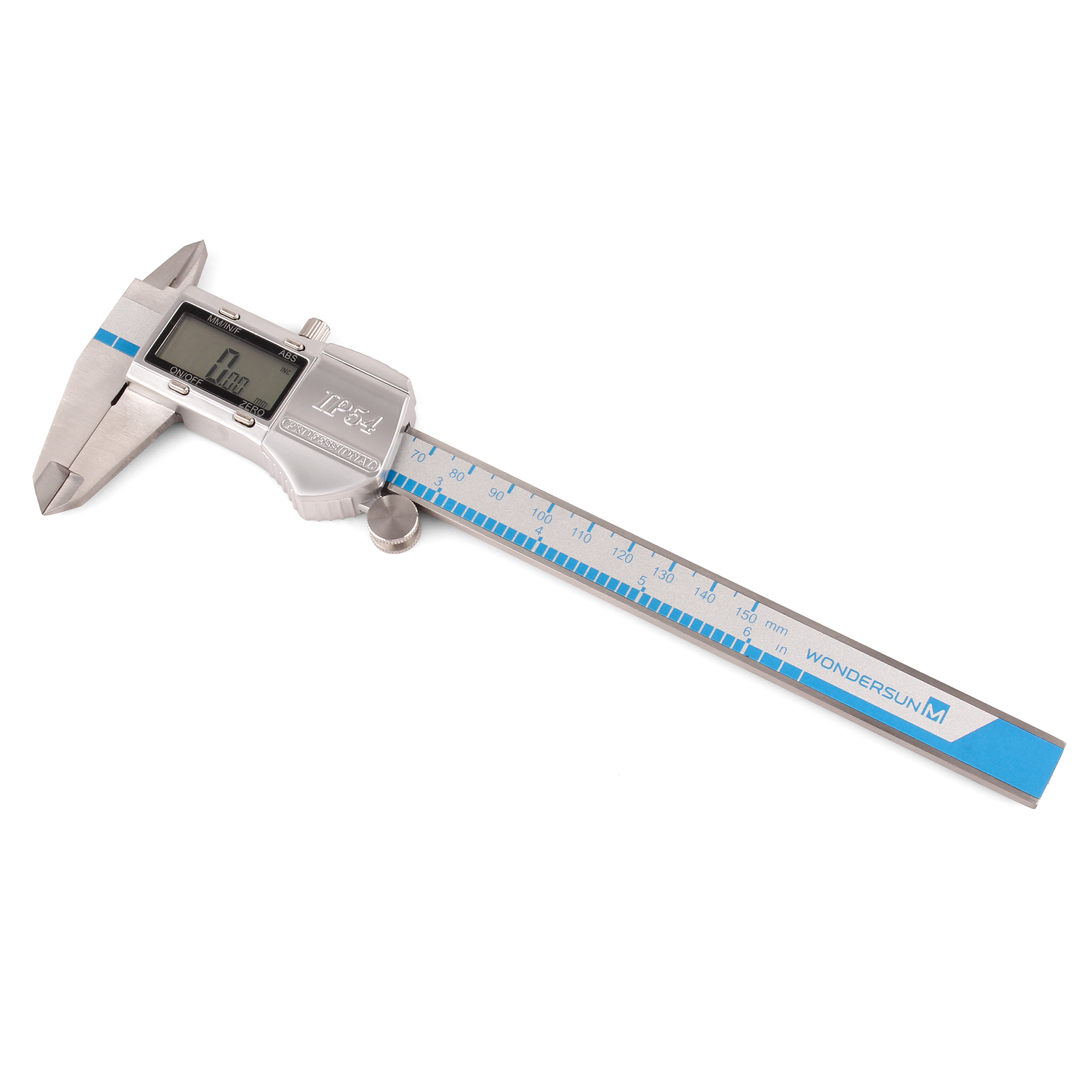
Understanding Digital Caliper Accuracy and Its Role in Precision Measurement
Digital caliper accuracy is critical to maintaining measurement integrity in high-stakes industries such as aerospace, automotive, and medical device manufacturing. Even a 0.001" deviation can trigger cascading quality failures, with over 62% of measurement-related product recalls linked to tool drift, according to a 2023 metrology study.
The Importance of Digital Caliper Accuracy in Manufacturing and Quality Control
In precision fields like aerospace and automotive engineering, digital calipers verify tight tolerances for components including turbine blades and brake assemblies. For instance, the adoption of traceable calibration protocols across five automotive suppliers reduced measurement errors by 34% in 2022, as reported in industry analyses.
Common Factors That Degrade Measurement Accuracy Over Time
Daily wear on sliding surfaces, temperature fluctuations beyond ±5°F, and particulate contamination are responsible for 78% of accuracy loss in digital calipers. Humidity further exacerbates issues by promoting oxidation of capacitive sensors, leading to monthly drift of up to 0.0005" in uncalibrated tools operating in moist environments.
Proper Calibration Practices: Zeroing, Verification, and Traceable Standards
Zeroing Digital Calipers Before Each Use to Ensure Consistent Baseline Accuracy
Zeroing resets the reference point to compensate for minor jaw misalignment or sensor drift. To ensure reliability, operators must zero the caliper in the same thermal environment where measurements are taken—temperature shifts of 10°C can induce 0.02 mm errors in stainless steel models due to material expansion.
Using Gage Blocks and Reference Surfaces for Periodic Verification
Certified gage blocks with ±0.001 mm tolerance provide a reliable standard for verifying caliper performance across its range. Best practices include:
- Cleaning contact surfaces prior to testing
- Applying light, consistent pressure to prevent jaw deflection
- Testing at three points—25%, 50%, and 75% of the caliper’s capacity—to assess linearity
Traceable Calibration vs. In-House Checks: When to Use Each Method
| Traceable Calibration | In-House Verification |
|---|---|
| Required for ISO/IEC 17025 compliance | Suitable for weekly drift checks |
| Uses NIST-certified references | Relies on internal gage blocks |
| Documents measurement uncertainty | Provides interim accuracy assurance |
Traceable calibration has been shown to reduce long-term measurement drift by 78% compared to non-certified methods.
Recommended Calibration Frequency Based on Usage and NIST Guidelines
| Usage Intensity | Calibration Interval |
|---|---|
| Daily use (>50 measurements/day) | 90 days |
| Weekly use | 180 days |
| Infrequent use | 360 days |
NIST SP 960-15 advises recalibration whenever in-house verification detects deviations exceeding ±0.01 mm.
Effective Cleaning and Contamination Control for Reliable Measurements
Best Practices for Removing Dirt, Dust, and Debris from Digital Caliper Surfaces
Tiny bits of contamination really mess with precision, sometimes affecting measurements by around 0.002 to 0.005 mm after just 100 hours of industrial operation. For regular maintenance, grab those soft bristle brushes and give the jaws and rails a good going over to sweep away any metal shavings. Then follow up with some lint free microfiber cloths slightly wet with 70% isopropyl alcohol. Never try scraping off stubborn gunk though. The right approach is to let those tough spots sit in a gentle cleaning solution for about five minutes first. After that soaking period, a simple wipe should do the trick without damaging surfaces.
Cleaning Techniques That Protect Electronic Components and Sensor Integrity
Shield the LCD display and data port during cleaning with silicone covers designed for electronic protection. For capacitive scales, use antistatic wipes lightly sprayed with a solution containing less than 5% ammonia. Never submerge any part of the caliper—liquid ingress accounts for 94% of premature encoder failures.
Safe Solvents and Tools to Avoid Damaging the Caliper’s Display or Scale
| Cleaning Area | Approved Tools | Maximum Frequency |
|---|---|---|
| Stainless Steel Jaws | 70% isopropyl alcohol wipes | After each shift |
| LCD Displays | Dry microfiber lens cloths | Daily |
| Capacitive Scales | Anti-static foam swabs | Weekly |
Neoprene squeegees effectively remove grease without damaging ground surfaces. Avoid acetone, WD-40, and silicone-based sprays, which degrade scale markings in 83% of cases when used regularly.
Optimal Storage and Environmental Protection to Extend Tool Life
Storing digital calipers in protective cases with moisture-absorbing silica gel
According to research published in the Precision Tools Journal back in 2022, airtight storage cases containing silica gel can cut down on oxidation risks by about 63% when compared to just leaving tools out on workbenches. Keeping the air dry is really important too. If humidity stays under 40%, corrosion doesn't happen so much. But watch out if it goes over 60% because then things start breaking down. The study found that around 78% of digital calipers showed signs of scale damage after just twelve months at those higher humidity levels. Another benefit comes from proper organization inside these cases. When there are dedicated slots for each tool, their jaws don't bump into each other which helps maintain those super accurate measurements we rely on, typically within plus or minus 0.0005 inches.
Managing thermal shifts, humidity, and magnetic fields that affect performance
To preserve calibration stability, avoid exposing calipers to:
- Temperature changes exceeding 2°C/hour (NIST recommends <0.5°C/hour)
- Magnetic fields stronger than 5 mT (e.g., near unshielded motors)
- More than three daily condensation cycles
Ideal storage conditions are 20°C±1°C and 30–50% relative humidity, minimizing thermal expansion effects on stainless steel jaws (0.00017" per °C).
Preventive use of protective oils and corrosion inhibitors for long-term storage
Applying non-conductive silicone-based oils to sliding surfaces reduces wear particle buildup by 41% during periods of inactivity, according to Tribology Research (2023). Including VCI (Vapor Corrosion Inhibitor) paper in storage cases protects against galvanic corrosion between dissimilar metals—such as aluminum frames and stainless steel components—for up to 36 months.
Avoiding Physical Damage and Ensuring Proper Handling Techniques
Preventing drops, misuse, and wear that compromise digital caliper accuracy
Handle digital calipers with care to maintain their ±0.001" resolution. Always use two hands when measuring and return the tool to its case after use. Implementing drop-prevention strategies reduces impact damage by 72% in high-use settings. Avoid sliding the jaws across rough surfaces, which accelerates wear on the capacitive encoder system.
Inspecting jaws for burrs, scratches, and alignment issues regularly
Biweekly inspections under 10x magnification detect 95% of defects affecting accuracy. Check jaw parallelism by closing them on a Grade 00 gage block—any visible gap over 0.0005" indicates the need for professional servicing. For minor burrs, use diamond-coated stones (1200+ grit) with unidirectional strokes to restore surface geometry without altering jaw alignment.
Standardizing user technique across operators to reduce measurement variability
Training programs that standardize thumbwheel pressure (1.5–2 N) and workpiece positioning reduce inter-operator variation by 83%. Conduct master-sample audits quarterly to confirm all technicians achieve ±0.0003" repeatability over ten repeated measurements.
Key Handling Standards
| Practice | Impact on Accuracy | Frequency |
|---|---|---|
| Drop-prevention training | Reduces impact errors by 67% | Annual |
| Jaw inspection | Prevents 90% of parallax errors | Biweekly |
| Technique audits | Maintains <0.001" operator variance | Quarterly |
Table of Contents
- Understanding Digital Caliper Accuracy and Its Role in Precision Measurement
- Proper Calibration Practices: Zeroing, Verification, and Traceable Standards
- Effective Cleaning and Contamination Control for Reliable Measurements
- Optimal Storage and Environmental Protection to Extend Tool Life
- Avoiding Physical Damage and Ensuring Proper Handling Techniques