
 EN
EN
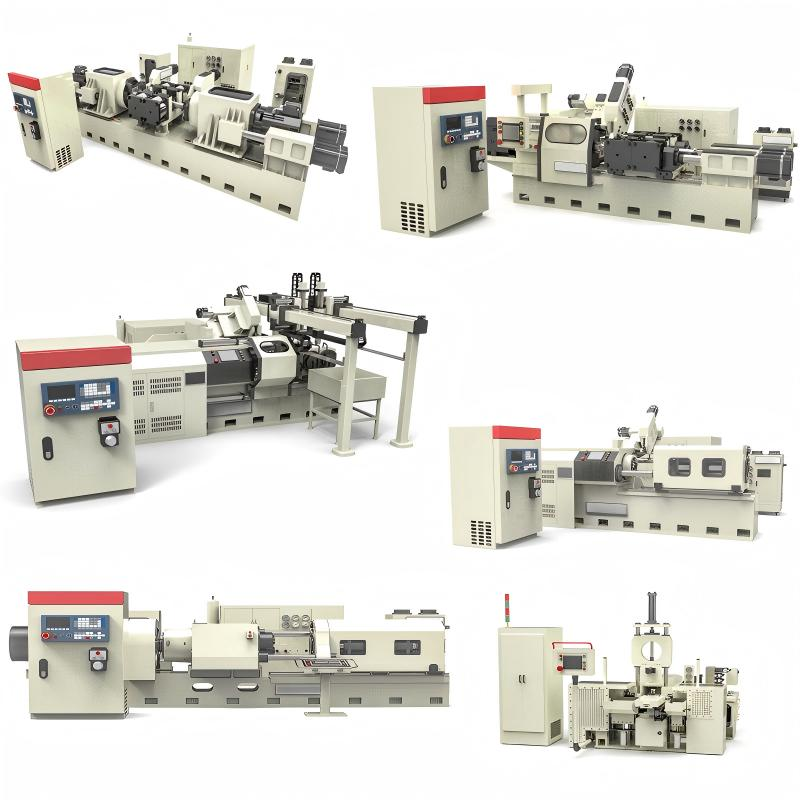
Understanding the Core Mechanism of Friction Welding Machines
What Is the Core Mechanism Behind a Friction Welding Machine?
Friction welding machines use a solid-state process that generates heat through mechanical motion rather than external energy sources. The process occurs in three phases:
- Friction Phase: One component rotates or oscillates under pressure, creating interfacial heat up to 90% of the base material’s melting temperature.
- Deformation Phase: Motion stops and forge pressure is applied, extruding surface oxides and enabling atomic diffusion across the joint.
- Cooling Phase: Pressure is maintained until the joint solidifies, forming a metallurgical bond stronger than the base materials.
This method eliminates the need for filler metals and avoids common fusion-related defects such as porosity and cracking.
How Does Solid-State Welding Differ from Fusion-Based Traditional Methods?
Old school welding approaches such as MIG, TIG, and regular arc welding work by heating materials until they melt together to create a joint. But this process often causes problems like warping from heat, leftover stresses in the metal, and weaker areas around where the weld was made, what some call heat affected zones or HAZs for short. Friction welding takes a different approach altogether. Instead of melting the metals, it actually joins them while keeping temperatures under the melting point threshold. This means the basic strength characteristics of the materials stay intact after welding. Take aluminum and copper connections as an example. When welded using friction methods, these joints maintain about 98 percent of their original pulling strength. That's way better than traditional fusion welding which only gets around 72 percent strength retention. The reason? Friction welding creates far fewer of those brittle compound formations between different metals that weaken the connection over time.
Types of Friction Welding (Rotary, Linear, Friction Stir) Explained
- Rotary Friction Welding: Best suited for cylindrical parts such as axles and shafts, where one part spins against a stationary counterpart.
- Linear Friction Welding: Uses back-and-forth motion, ideal for non-circular components like turbine blades.
- Friction Stir Welding (FSW): Employs a non-consumable tool to plasticize materials, producing high-integrity joints in aerospace-grade aluminum with 15–20% greater fatigue resistance.
Manufacturers often choose rotary or FSW for automotive drivetrains and aerospace structures, where consistent, high-strength joints outperform traditional welding outcomes.
Joint Quality, Strength, and Performance: Friction vs. Traditional Welding
Comparison of Welding Methods in Terms of Process Efficiency
Friction welding makes the whole process much more efficient since there's no need for filler materials, no preheating required, and absolutely zero cleanup after the weld. For those working with cylindrical parts, this method can actually run around 100 times quicker than traditional arc welding techniques because it works at a solid state rather than melting everything down. The energy savings are pretty impressive too when compared to MIG or TIG welding methods. We're talking about reductions somewhere between 30% to 50% in power usage mainly because the cycles take less time overall and the heat applied during the process stays pretty low. This matters a lot for manufacturers looking to cut costs while still getting quality results.
Joint Strength and Structural Integrity: Data-Driven Performance Metrics
Friction welding produces joints with ‰2% porosity, far below the 8–12% typical in traditional welds. The dynamic recrystallization during forging results in fine-grained microstructures that enhance tensile strength by 15–25% in aluminum-copper alloys.
| Metric | Friction Welding | Traditional Welding |
|---|---|---|
| Average Tensile Strength | 420 MPa | 340 MPa |
| Heat-Affected Zone (HAZ) | 1–3 mm | 5–8 mm |
| Defect Rate | 0.8% | 6.7% |
Weld Quality and Consistent Outcomes in Friction Welding
Machine-controlled parameters ensure 99.4% repeatability in aerospace-grade aluminum joints, surpassing manual TIG welding’s 85–90% consistency. Without reliance on shielding gases or consumable fillers, friction welding minimizes contamination risks–making it ideal for critical applications like turbine blades and medical devices.
When Traditional Methods Still Outperform: Industry-Specific Limitations
Friction welding works great for many applications but struggles when dealing with really thick sections over about 50mm thick or trying to make repairs in tight spots on site. Most manufacturers still rely heavily on arc welding techniques for their heavy equipment needs, probably because the upfront investment isn't so steep compared to friction systems, plus arc welders handle odd shapes much better. The catch though? Arc welding tends to produce more defects overall, guzzles more power during operation, and generally doesn't hold up as well structurally after years of service. Many plant managers know this tradeoff all too well from experience.
Material Compatibility and Applications in Advanced Industries
Why Friction Welding Excels in Joining Dissimilar Metals
Friction welding works differently because it doesn't melt the metals completely, which helps avoid those brittle intermetallic phases that form when dissimilar metals are joined together. What happens instead is mechanical friction generates heat, bringing materials up to around 80 to 90 percent of their actual melting temperature. This creates really solid connections even between metals that expand and conduct heat at very different rates. When we look at aluminum joined to steel specifically, these joints can reach strengths close to 95% of what the original metal could handle on its own. That's way better than what arc welding typically manages, which usually falls somewhere between 65 and 75%. Plus there's no need for extra filler metals during the process, so there's less chance of introducing contaminants into sensitive areas like battery packs inside electric vehicles where purity matters a lot.
Limitations of Traditional Welding with Heterogeneous Materials
Welding different kinds of metal together is tough for both MIG and TIG methods because they melt at completely different temperatures and distribute heat all wrong. Some research from last year in the auto industry showed pretty shocking results too. About 42% of those aluminum to steel welds just gave out early on account of corrosion between the metals and those annoying little cracks forming when things get hot then cool down again. And it gets worse when looking at what happens right around the weld area itself. The heat affected zone goes through changes that actually make the joint weaker over time. This becomes especially problematic with certain alloys like titanium and nickel which are commonly found in chemical plants where precision matters most. Experienced welders know this stuff firsthand and often tell stories about having to redo entire sections because of these issues.
Case Study: Aerospace Applications Using Friction Stir Welding
The Artemis program at NASA relies on friction stir welding when putting together the fuel tanks for Orion spacecraft using AA2219 aluminum alloy. Compared to traditional plasma arc welding methods, this technique actually gives parts about 12 percent better fatigue resistance while cutting down on those pesky pores by almost 91%. Pretty impressive stuff! Automated welding systems now handle entire 6 meter long rocket panels in one go with amazing precision around plus or minus 0.2 millimeters for alignment. This solves some longstanding problems we've had with hot cracking in these delicate aerospace components made from thin walls. Anyone interested in learning more about how different materials work together might want to check out recent industry reports looking at all sorts of advanced joining technologies being developed right now.
Production Efficiency, Automation, and Operational Cost Benefits
How Friction Welding Machines Enhance Production Speed and Efficiency
The cycle time for this process is anywhere from 40 to 70 percent quicker compared to traditional arc welding techniques because there's no need for preparing filler material or doing all that tedious post weld finishing work. When companies implement automated loading systems into their friction welding lines, they typically see uptime figures between 95 and 98 percent. That's way better than what most shops get with manual MIG operations which usually hover around 82 percent. For those in the aerospace industry specifically, these improvements translate to serious productivity gains. Manufacturers can crank out more than 300 turbine blades during a single shift, which is almost twice what conventional welding methods manage to produce under similar conditions.
Reduced Material Waste and Minimal Post-Weld Processing Needs
Precise pressure control and zero consumables reduce material waste by 25–50%. Heat-affected zones are 60–80% smaller, cutting machining time for automotive driveshafts from 22 minutes to just 7. Additionally, the absence of shielding gases and flux lowers energy consumption by 30%, further reducing operational costs.
Trend Analysis: Automation Integration in Modern Friction Welding Systems
Over 68% of new friction welding machines include IoT-enabled monitoring, allowing real-time adjustments that improve consistency by 19%. Integrated robotic arms with vision systems achieve 0.02mm repeatability in medical device production–four times more accurate than human operators.
Long-Term ROI Through Reduced Labor and Maintenance Costs
Although initial investment averages $350k–higher than the $120k for traditional setups–friction welding systems offer a 3.8-year payback period due to:
- 60% lower labor costs (one operator vs. three welders per station)
- 45% reduction in maintenance (no electrode replacements or gas system upkeep)
- 30% longer tooling life under controlled thermal conditions
Independent evaluations show a 22:1 return on investment over ten years when replacing TIG cells with automated friction systems in high-volume production environments.
Environmental Impact, Safety, and Energy Consumption Comparison
Lower Emissions and Safer Operations with Friction Welding Machines
Friction welding cuts down on air pollution significantly because it doesn't need filler metals or shielding gases. Tests show this process can slash airborne contaminants by around 40% when compared to traditional arc welding methods. Since there's no molten metal involved during the process, workers aren't exposed to harmful fumes, dangerous UV light, or flying sparks which makes factories much safer places to work. Recent research from last year indicates that using friction stir welding in car production lowers carbon emissions somewhere around 1.2 kilograms of CO2 equivalent for each welded joint. For manufacturers looking to green their operations, these environmental benefits are hard to ignore while also making their facilities safer for employees day after day.
Energy Efficiency Compared to Arc and MIG/TIG Welding Processes
Friction welding consumes 30% less energy than MIG or TIG methods, averaging 8.7 MJ per joint versus 12.5 MJ for arc welding. Shorter cycles and reduced thermal distortion cut post-weld energy needs by 65%. Benchmark data shows friction welding systems save 18.4 kWh/day in aerospace production compared to conventional approaches.
Table of Contents
- Understanding the Core Mechanism of Friction Welding Machines
- Joint Quality, Strength, and Performance: Friction vs. Traditional Welding
- Material Compatibility and Applications in Advanced Industries
- Production Efficiency, Automation, and Operational Cost Benefits
- Environmental Impact, Safety, and Energy Consumption Comparison