
 EN
EN
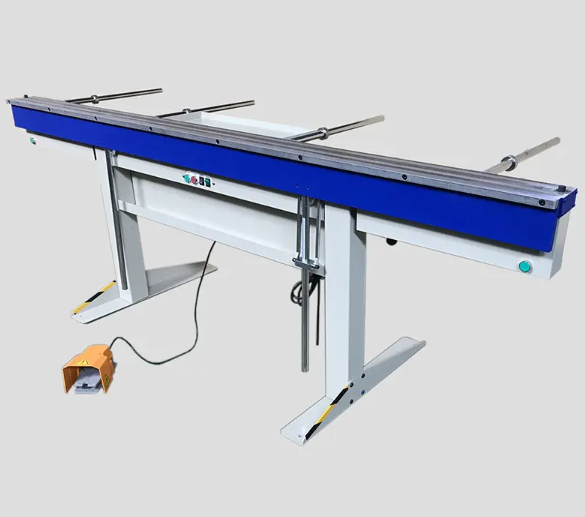
Understanding Bending Machine Types and Core Capabilities
Press Brake vs. Rotary Bending vs. Roll Bending Machines
Press brakes bend sheet metal with remarkable accuracy by applying hydraulic or electric pressure. They work great for creating those V-shaped dies and sharp corners in materials that are around 20mm thick at most. Then there are rotary benders which shape tubes and pipes without squishing them flat thanks to their spinning tools. These machines are pretty much a must have when working on exhaust systems or crafting handrails. For rolling plates or structural parts into curved shapes, roll benders do the job gradually with three rollers doing all the work. They're especially handy for making cylindrical storage tanks and those fancy architectural curves we see in modern buildings. Each type has its own strengths depending on what needs to be made.
| Machine Type | Force Mechanism | Precision (mm) | Ideal Materials |
|---|---|---|---|
| Press Brake | Hydraulic/Electric | ±0.1 | Steel, Aluminum |
| Rotary Bender | Rotary Compression | ±0.5 | Tubes, Pipes |
| Roll Bender | Radial Pressure | ±1.0 | Plates, Sections |
Key Performance Metrics: Tonnage, Bending Accuracy, and Material Compatibility
The tonnage rating basically tells us how much force a machine can apply when working with metal. For instance, a standard 100-ton press brake should handle bending operations on around 10mm thick mild steel without issues. When there's not enough tonnage available, parts tend to deform improperly during fabrication. On the flip side, going overboard with higher capacity machines just adds unnecessary expenses both upfront and throughout operation. Getting accurate bends within those tight tolerances of about plus or minus half a degree relies heavily on good CNC systems paired with rigid tools, which directly affects how often we have to fix defective parts later. Different materials behave differently too. Aluminum generally needs about a third less force compared to stainless steel, but titanium presents special challenges requiring specific tooling setups and custom angle corrections because it springs back so much after forming (ASM International reports similar findings). According to recent industry data from the Fabricators Council, roughly two thirds of all scrap waste comes from simply pairing the wrong material with inappropriate machinery specs. That's why getting these specifications right matters so much in production environments.
Matching Bending Machine Specifications to Your Production Needs
Evaluating Part Complexity, Batch Size, and Tolerance Requirements
Picking the correct bending machine comes down to matching what it can do with what actually happens on the shop floor. When dealing with small batches or straightforward bends (two or fewer angles per piece), manual or entry-level hydraulic machines tend to be the wallet-friendly option. Things get different when working with complicated shapes like those multi-angle parts needed for aircraft construction. These jobs demand computer controlled systems that can hold tight angle tolerances around plus or minus 0.1 degrees throughout entire production cycles. For shops running high volumes (say five thousand pieces or more each month), going automatic makes sense. Automated setups with quick tool switching reduce the time lost between jobs. Keep these points in mind when making the selection:
| Production Factor | Manual/Hydraulic Solution | CNC/Automated Solution |
|---|---|---|
| Part Complexity | Basic shapes (≤2 bends) | Intricate contours (3D profiles) |
| Batch Size | <100 units | >500 units |
| Tolerance Precision | ±0.5° (operator-dependent) | ±0.1° (program-controlled) |
| Changeover Speed | 15–30 minutes | <5 minutes (auto-tooling) |
How Material Thickness and Alloy Type Influence Bending Machine Selection
The characteristics of different materials play a major role in deciding what kind of equipment we need, how complex our controls should be, and which tooling approaches work best. Take stainless steel at 16 gauge as an example it typically needs around 20 tons per meter or more, which points toward using those heavy duty hydraulic press brakes most shops have. Aluminum alloys are lighter on the tonnage front, usually needing between 8 to 12 tons per meter, but they respond really well to servo electric systems since these help avoid those unsightly surface marks that can happen otherwise. When working with harder materials such as titanium, there's about a 15 to 40 percent higher chance of springback issues according to some studies from ASM International back in 2023. That means investing in CNC machines equipped with real time angle correction becomes essential for getting accurate bends. For thin gauge stuff under 1.2 mm thickness, servo electric setups tend to give better results overall. On the flip side, when dealing with plates thicker than 10 mm, look for machines rated at least 100 tons capacity. And remember to always check the material's yield strength against what the machine specs say before starting any job to avoid breaking tools prematurely or ending up with parts that don't meet quality standards.
Automation, CNC Integration, and Future-Proofing Your Bending Machine Investment
Benefits of CNC-Controlled Bending Machines for Repeatable Precision
CNC bending machines cut out the guesswork by following programmed instructions over and over again, so every part gets bent exactly the same way no matter how many are made. The consistency means factories waste about 30 percent less material compared to when workers do the job manually, plus they maintain really tight tolerances around plus or minus 0.1 degrees. Car companies tell us their production lines speed up by roughly 40% when switching to these computer controlled systems because the machines handle complicated bends one after another without needing constant adjustments or someone standing there watching the whole time.
Assessing Tool Changers, Offline Programming, and IoT Readiness
Future-ready bending machines integrate three foundational technologies:
- Automatic tool changers, completing die swaps in under 15 seconds, enabling flexible job routing without line stoppage
- Offline programming software, which simulates bend sequences virtually to validate geometry, detect collisions, and optimize cycle time before metal touches tooling
- IoT readiness, allowing real-time monitoring of vibration, temperature, and cycle data to predict maintenance needs and support remote diagnostics
Collectively, these features reduce unplanned downtime by 45%, according to 2023 fabrication efficiency benchmarks.
Total Cost of Ownership: Beyond the Initial Bending Machine Price
Evaluating a bending machine’s true financial impact requires looking beyond the purchase price. While the upfront investment is tangible, hidden operational expenses often determine long-term profitability. Failing to account for these can erode margins unexpectedly.
Hidden Costs—Tooling, Maintenance, Operator Training, and Downtime
Four recurring expenses frequently overlooked in initial budgets:
- Tooling: Custom dies and punches for specialized bends represent ongoing capital outlay
- Maintenance: Scheduled servicing and emergency repairs scale with usage intensity and machine age
- Operator Training: Proficiency development is essential—not only for precision and safety but also for maximizing automation ROI
- Downtime: Adjustments, breakdowns, and setup delays trigger cascading production losses
Together, these can add 30–50% to baseline costs over five years. Manufacturers prioritizing intuitive interfaces, modular tooling, and diagnostic accessibility significantly mitigate these impacts.
ROI Analysis: How the Right Bending Machine Improves Throughput and Reduces Scrap
Precision-engineered bending machines accelerate ROI through two primary levers:
- Throughput gains: CNC automation and quick-change tooling cut average setup times by 60–70%, unlocking higher utilization and volume capacity
- Scrap reduction: Consistent accuracy lowers material waste by 3–5%—driven by fewer dimensional errors and less rework
This combination typically delivers payback in 12–18 months. For example, eliminating just 2% scrap on a $500k annual material spend saves $10k yearly—directly improving bottom-line profitability while offsetting higher initial investments in quality equipment.