
 EN
EN
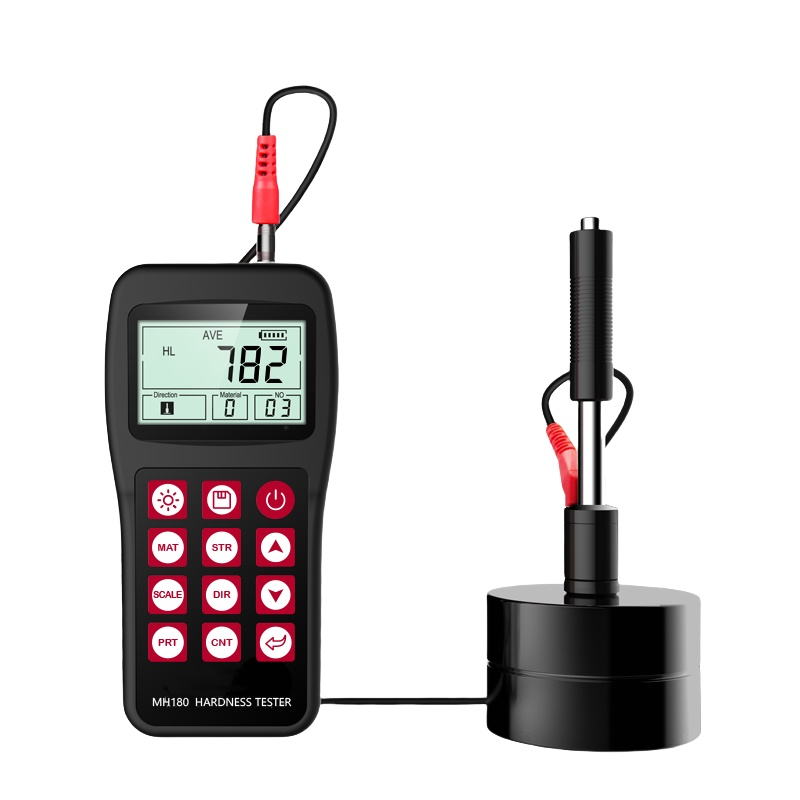
Understanding the Role of Hardness Testers in Metal Inspection
Why hardness testing is critical for metal workpiece quality control
According to the Metal Quality Report from last year, around 7 out of 10 material problems can actually be caught early through proper hardness testing. This process checks how well materials resist wearing down over time and what happens when they start to deform under pressure. The test also tells us if the heat treatments worked properly and whether the material meets those important strength requirements we all talk about. Take forged steel crankshafts as just one case study. These components need specific hardness levels or else engines might fail completely during operation. That's why most serious manufacturers make sure hardness measurements are part of their regular quality checks these days.
How a hardness tester measures resistance to deformation
Modern hardness testers quantify indentation resistance using standardized probes:
- Brinell testers use a 10mm tungsten carbide ball under 3,000kgf loads
- Rockwell units measure depth changes from minor-to-major loads
- Vickers employs a diamond pyramid to calculate hardness via diagonal indentation ratios
As defined in ASTM E10, these methods correlate deformation behavior with mechanical properties like yield strength, achieving <3% margin of error in calibrated systems.
Integrating hardness testing early in the production workflow
Conducting hardness verification after casting or forging reduces rework costs by 34% by identifying annealing defects before machining. Automotive suppliers now perform Rockwell C-scale checks on gear blanks prior to grinding—a practice that shortened Toyota’s defect detection cycle by 19 workdays during 2023 pilot trials.
Comparing Rockwell, Brinell, Vickers, and Knoop Hardness Testing Methods
Rockwell Hardness Tester: Speed and Industrial Suitability
Rockwell testers are pretty much everywhere in manufacturing shops because they give quick results right away, usually within about 15 seconds, and don't require much preparation of the test surface. These devices work by pressing either a diamond cone or a tungsten carbide ball against the material. First comes a small initial force around 10 kgf, then a bigger push between 60 to 150 kgf. The difference in how deep these impressions go determines the hardness rating. The tester has two main scales HRB and HRC that cover a wide range of materials. For steels, especially those hardened ones going up to 100 HRC on the scale, and also works well with softer stuff like aluminum. That's why so many auto parts manufacturers rely on Rockwell testing when checking bolts and other fasteners according to ASTM E18 guidelines. Plus, since the process doesn't leave behind much residue, there's less chance of getting false readings from contaminated surfaces during quality checks.
Brinell Hardness Tester: Deep Impressions for Coarse or Heterogeneous Metals
Brinell testing works really well for those rougher materials like cast iron and various types of forging. The method involves pressing a tungsten carbide ball that ranges from 1 to 10 mm in diameter against the material surface with forces between 500 and 3000 kgf. What makes this approach so effective is that the relatively large indentation created helps smooth out any small variations in the material's structure, which leads to more trustworthy HBW readings overall. When using a 10 mm diameter ball along with the full 3000 kgf load, tests show less than 3% measurement error when applied to low carbon steel samples rated around 200 HBW. However, there are limits here too. This same setup won't work properly on harder surfaces above approximately 650 HBW because the indenter itself starts to deform under such extreme conditions, compromising both accuracy and safety during testing.
Vickers Hardness Tester: Precision With a Diamond Pyramid Indenter
The Vickers hardness test works by pressing a diamond pyramid with a 136 degree angle into materials, leaving behind tiny indents that can be measured under microscopes ranging from 10 times to 100 times magnification. The hardness value scale goes from around 30 up to 1500 HV, making it possible to compare different substances directly. For instance, titanium typically falls between 250 and 350 on this scale while case hardened steels show higher values. What makes Vickers particularly useful is how it addresses issues with Rockwell tests by measuring diagonals instead. Today's labs certified under ISO/IEC 17025 standards can get results within plus or minus 1.5 percent consistency, something absolutely critical when validating coatings for aircraft components where even small variations matter a lot.
Knoop Hardness Tester: Best for Thin or Brittle Metal Workpieces
The Knoop indenter has this unique elongated rhombic shape with a 7 to 1 axis ratio that actually helps prevent cracks from forming in brittle stuff like ceramic coatings and glass surfaces. This is especially useful when we need to test those really thin films that are less than 50 micrometers thick. When applying loads between 10 and 1000 grams force, the HK scale can pick up on those subtle changes in hardness across nitrided steel samples, typically ranging from around 800 to 1200 on the HK scale. What makes this method stand out compared to traditional Vickers testing is that it creates about 95 percent less interference from the underlying material. Industry reports show semiconductor companies get pretty consistent results too, with measurements varying by just plus or minus 2 percent when they test those tiny 0.1 millimeter diameter gold bonding wires used in chip manufacturing.
Load Ranges and Scale Applicability Across Hardness Testing Methods
| Method | Typical Load | Material Hardness Range | Suitable Materials |
|---|---|---|---|
| Rockwell | 60–150 kgf | 20–100 HRC | Steel, brass, aluminum |
| Brinell | 500–3000 kgf | 8–650 HBW | Cast iron, forgings, soft alloys |
| Vickers | 1–100 kgf | 30–1500 HV | Thin coatings, hardened steel |
| Knoop | 10–1000 gf | 100–3000 HK | Brittle metals, micro-samples |
This comparison shows how load capacity and scale range guide tester selection—higher forces for bulk materials, precision loads for delicate components.
Matching Hardness Testers to Metal Types: Steel, Aluminum, and Titanium
Material compatibility is the primary factor in selecting a hardness tester. Research indicates strong correlations between metal type and optimal method:
| Metal Type | Preferred Methods | Load Range | Key Consideration |
|---|---|---|---|
| Carbon Steel | Rockwell C (HRC), Brinell HBW | 50-3,000 kgf | Avoid surface decarburization |
| Aluminum Alloys | Brinell HBW, Vickers HV | 10-1,000 kgf | Compensate for low modulus |
| Titanium Grades | Vickers HV, Knoop HK | 1-50 kgf | Account for elastic springback |
Impact of Microstructure on Indentation Accuracy
Grain size and phase distribution significantly affect indentation consistency. Coarse-grained steel (ASTM grain size 3–5) exhibits 12% higher Rockwell B deviation than fine-grained equivalents (grain size 7–10) in controlled trials. In heterogeneous alloys like duplex stainless steel, Vickers testing reduces measurement scatter by 34% compared to Brinell.
Resolving Discrepancies Between Rockwell and Vickers on Case-Hardened Steel
When case depth falls below 0.3 mm, Rockwell C readings can deviate by ±4 HRC due to substrate influence, whereas micro-Vickers (HV 0.5) maintains ±1.5% accuracy. Experts recommend maintaining a 10:1 depth-to-indentation ratio for through-hardened layers and using diamond anvils for surfaces exceeding 650 HV.
Testing Thin or Brittle Materials: Advantages of Knoop and Micro-Vickers
Knoop testers produce shallower indentations (0.020 mm vs. 0.140 mm for standard Vickers), making them ideal for:
- Carbide coatings under 50 μm
- Glass-metal composites
- Aged aerospace alloys prone to microcracking
Micro-Vickers systems offer 0.1 μm resolution at ceramic-metal interfaces, enabling non-destructive hardness mapping of heat-affected zones.
Ensuring Accuracy and Compliance in Hardness Testing
Key Factors Affecting Measurement Consistency
Getting accurate test results depends heavily on three main factors: what's going on around us environmentally, how skilled the person running the tests is, and proper surface prep work. When temperatures fluctuate more than 2 degrees Celsius up or down, Rockwell C measurements tend to drift about 1.5 points according to ASTM standards from last year. Something as small as tilting the load applicator at just 5 degrees angle cuts Brinell numbers down by roughly 8 percent when working with aluminum samples. For Vickers testing on polished steel surfaces, we need surface roughness under 1.6 micrometers RA if we want trustworthy readings. This isn't just theory either - after looking at over 14 thousand indentation tests across twelve months, researchers confirmed this threshold makes all the difference between good data and misleading results.
Calibration Standards and Compliance With ASTM E10, E92, and E18
Testers who are certified need to get their equipment calibrated every year according to national standards like NIST in the US or PTB over in Germany. When it comes to actual testing procedures, ASTM E18 specifies that Rockwell hardness tests must be verified using standard test blocks at five different hardness levels. For Brinell testing under ASTM E10 and Vickers testing per ASTM E92, there's an additional requirement for calibrating the optical systems involved. The automotive industry has seen real improvements too. After implementing ISO 17025 compliant calibration practices across 26 manufacturing sites last year, major car part suppliers reported cutting down on measurement errors by nearly two thirds. That kind of accuracy makes all the difference in quality control processes.
Innovations in Hardness Tester Technology for Modern Manufacturing
Digital Imaging and Automated Indentation Analysis
Modern systems integrate high-resolution digital imaging with AI-powered analysis to measure indentations at micron-level precision. These automated tools eliminate human interpretation errors, reducing inconsistencies by 32% compared to manual methods—especially beneficial in microhardness testing of advanced alloys. This technology supports faster inspections while meeting ASTM E384 requirements.
IoT Integration for Real-Time Monitoring in Production Lines
Testers equipped with IoT technology send their readings straight to main quality control systems, which means manufacturers can track how materials perform throughout different production steps as they happen. The devices come with built-in sensors that keep an eye on things like room temperature and applied pressure, then tweak their math on the fly to account for changes in conditions. According to a recent industry report from 2023, factories that implemented these connected testing solutions spotted problems almost 60% quicker than before. That translates to real money saved too many plants reported reducing their waste disposal expenses by around eighteen thousand dollars each month after switching over.
Portable Hardness Testers for Field-Based Metal Inspection
Portable devices now deliver lab-grade accuracy in aerospace and energy field inspections. Battery-powered and compact, they perform Rockwell or Vickers tests in confined spaces. Studies show inspectors complete assessments 40% faster than traditional methods while maintaining ±1.5% consistency. Some models feature wireless data logging and tablet integration for instant reporting.
FAQ Section
What is the importance of hardness testing in metal inspection?
Hardness testing is crucial for assessing material resistance to deformation, verifying heat treatment effectiveness, and ensuring compliance with strength requirements, ultimately minimizing the risk of failure during operation.
How do Brinell and Rockwell hardness testers differ?
Brinell testers use large indentation with a carbide ball, suitable for coarse metals, while Rockwell testers offer quick results using a diamond cone or tungsten carbide ball, ideal for various material types.
When are Vickers and Knoop hardness testers ideal?
Vickers testers are great for precise measurements, especially for thin coatings and hard substances; Knoop testers are suited for brittle materials and micro-samples due to shallower indentations.
How do IoT and digital imaging innovations benefit hardness testing?
These innovations enhance precision, reduce human error, allow real-time data tracking, and enable faster inspections, improving quality control across industries.
Table of Contents
- Understanding the Role of Hardness Testers in Metal Inspection
-
Comparing Rockwell, Brinell, Vickers, and Knoop Hardness Testing Methods
- Rockwell Hardness Tester: Speed and Industrial Suitability
- Brinell Hardness Tester: Deep Impressions for Coarse or Heterogeneous Metals
- Vickers Hardness Tester: Precision With a Diamond Pyramid Indenter
- Knoop Hardness Tester: Best for Thin or Brittle Metal Workpieces
- Load Ranges and Scale Applicability Across Hardness Testing Methods
- Matching Hardness Testers to Metal Types: Steel, Aluminum, and Titanium
- Impact of Microstructure on Indentation Accuracy
- Resolving Discrepancies Between Rockwell and Vickers on Case-Hardened Steel
- Testing Thin or Brittle Materials: Advantages of Knoop and Micro-Vickers
- Ensuring Accuracy and Compliance in Hardness Testing
- Innovations in Hardness Tester Technology for Modern Manufacturing
- FAQ Section