
 EN
EN
Why Vernier Calipers Remain Essential in High-Precision Industrial Metrology
The enduring advantage: reliability, simplicity, and NIST-traceable accuracy without batteries or software
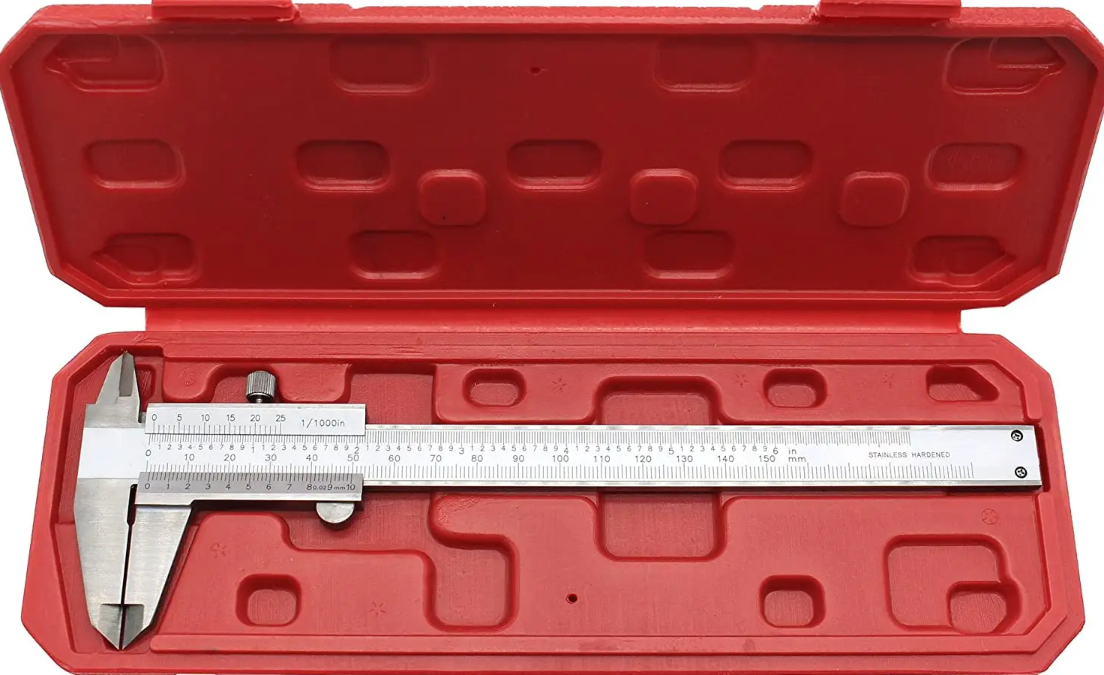
When it comes to tough industrial settings where electronics just won't cut it, vernier calipers stand out for their rock solid reliability. These aren't your fancy digital gadgets that need charging or software updates. Instead, they rely on good old mechanical engineering principles to stay accurate according to NIST standards. The simple design means fewer things can go wrong there's no battery life to worry about and circuits aren't going to short out mid-measurement. Most operators get down to 0.02 mm precision using that sliding vernier scale we've all seen in action. The National Institute of Standards and Technology has actually tested and certified this tech over time. Think about places like nuclear plants or out in the field where getting someone to fix broken gear might take days. That's where these analog instruments really shine, keeping measurement going without hiccups. A recent survey found that nearly 8 out of 10 quality control engineers still stick with vernier tools because they don't have to deal with all those pesky electronic issues that keep cropping up with modern equipment.
ISO 2768-mK and GD&T compliance: how 0.02 mm vernier resolution meets critical aerospace and medical device tolerances
High quality vernier calipers with 0.02 mm resolution meet the ISO 2768-mK specifications needed for critical parts in medicine and aerospace industries. These tools check important GD&T characteristics such as how round turbine blades are or if surgical guide instruments stay parallel. Even small errors beyond ±0.05 mm can lead to serious problems in operation. When making medical devices, these calipers accurately measure spinal rods down to 0.03 mm precision, which actually goes beyond what the FDA requires. In aviation work, they ensure wing flap brackets conform to strict AS9100 standards through careful calibration. Research from 2024 showed something interesting too: well kept vernier calipers spotted changes in titanium aircraft fittings about three hours quicker than digital versions when tested under varying temperatures. That makes them essential equipment for initial inspection processes where having clear records of measurements just cannot be compromised.
| Industry | Critical Tolerance | Vernier Caliper Performance |
|---|---|---|
| Aerospace | ±0.05 mm | Exceeds by 60% (0.02 mm) |
| Medical Devices | ±0.07 mm | Exceeds by 71% (0.02 mm) |
Core Vernier Caliper Applications in Manufacturing Quality Control
First-article and in-process inspection in low-volume, high-mix job shops
Vernier calipers are essential for checking dimensions during those first article inspections when prototype parts need to match what was drawn on paper. Shops working with low volume but lots of different parts, especially in aerospace or medical device manufacturing, find these tools invaluable. They let workers switch quickly from one component to another without having to reset everything each time. The simple mechanics make them great for measuring important features like wall thickness and bore diameter across all sorts of materials including stainless steel, titanium, and even some composites. Getting good results means applying just the right amount of pressure on the jaws though. Push too hard and measurements might be off by about 0.05 mm based on what NIST says about measurement errors. On shop floors where CNC machines are running, these calipers give instant feedback while checking things like turned diameters or milled slots. This helps cut down waste in small batch runs where every part counts.
Verifying GD&T features (e.g., concentricity, parallelism) using calibrated vernier caliper techniques
Calibrated vernier calipers remain essential tools when it comes to validating GD&T specs, especially for those tricky concentricity checks and parallelism assessments on cylinder parts. Technicians typically take readings around different clock positions to spot any runout issues that might keep rotating components from passing ISO 1101 standards. When looking at parallelism, the focus shifts to measuring how consistent thickness is across reference surfaces. The flat jaws of good quality calipers help maintain that right angle positioning needed for those super tight tolerances below 0.03 mm. Calibration against grade 0 gauge blocks isn't optional but necessary for keeping things traceable. And let's not forget about controlling ambient temperatures within ±1°C range too since even slight thermal changes can mess up delicate measurements for stuff like medical implants or turbine blades. Before jumping into any serious inspection work, always double check for zero error first. For gaps between parts, nothing beats properly calibrated feeler gauges doing their job accurately.
Mastering Accuracy: Zero Error Correction and Best Practices for Reliable Vernier Caliper Usage
When and how to apply zero error correction – balancing traceability, operator skill, and measurement uncertainty
Checking for zero error helps keep vernier calipers accurate when there's a gap between the jaws even though they appear closed. Anyone working with these tools needs to do this test regularly especially before important measurements happen, right after dropping or bumping the instrument, and as part of regular calibration checks using proper gauge blocks. The actual process is pretty straightforward: gently bring the jaws together, look at what number shows up, then either adjust physically or calculate the difference mathematically if physical adjustments aren't possible. Getting really precise readings that meet NIST standards requires attention to several things at once. First, having good written procedures for calibration makes sure everything stays traceable back to official standards. Second, operators need practice spotting those tiny parallax errors under 0.02mm which most people can't see with naked eye alone. Third, understanding how much uncertainty comes into play during measurements matters too. Research from Quality Engineering Journal in 2023 found that folks without proper training end up making mistakes around ±0.05mm in about four out of five cases when trying to fix errors manually. Because of this, companies working in fields where precision counts like aerospace manufacturing or medical devices should combine their standard ISO/IEC 17025 compliance requirements with hands-on training sessions using realistic simulation equipment to cut down on mistakes caused by human error.
Five field-proven precautions: cleaning, alignment, jaw pressure, temperature control, and calibration frequency
| Precaution | Implementation | Impact on Accuracy |
|---|---|---|
| Jaw Cleaning | Wipe with lint-free cloth after each use; inspect for debris under 10x magnifier | Prevents 0.01–0.03 mm errors from particles |
| Workpiece Alignment | Position caliper perpendicular to avoid Abbe error; use datum surfaces | Reduces cosine errors by 90% |
| Jaw Pressure | Apply consistent thumb-roller force; avoid deformation of thin-walled materials | Eliminates 0.02 mm compression variance |
| Temperature Control | Acclimate calipers/workpieces 30 mins in 20°C environments | Neutralizes 0.005 mm/°C thermal expansion |
| Calibration Cycles | Quarterly checks ± post-impact audits with Class K gauge blocks | Maintains ISO 6789 compliance |
Field data reveals calipers lose ±0.01 mm accuracy monthly in high-use settings (NIST IR 8312). Prioritize quarterly recalibration and operator certifications to sustain medical device GD&T conformance.