
 EN
EN
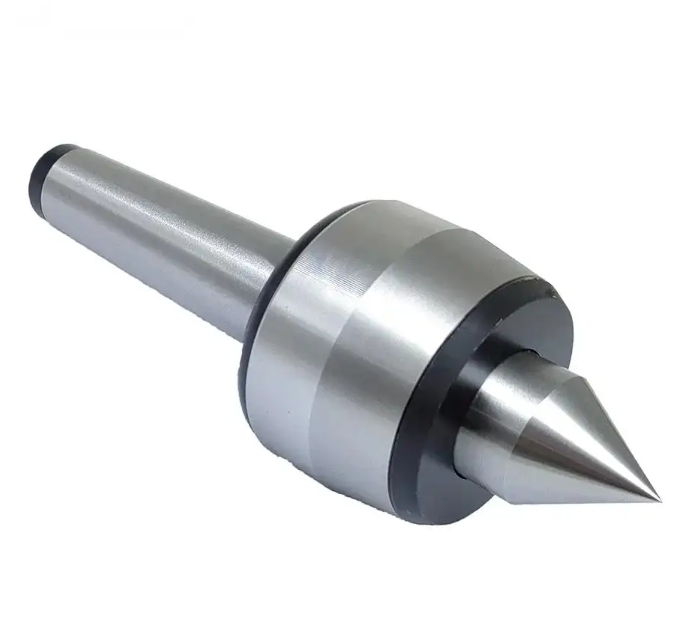
Core Live Center Selection Criteria That Impact Machining Precision
Surface Finish Degradation and Tool Life Loss from Mismatched Live Centers
When there isn't enough thrust load applied, it creates tiny movements between the workpiece and the live center. These small shifts lead to those annoying chatter marks we all know too well, plus parts that don't meet dimensional specs. The problem gets worse fast when working with abrasive materials because the bearings wear down quicker than normal. Surface finishes suffer too, dropping from our target Ra value around 0.8 microns down to sometimes over 2.5 microns in bad cases. Parts that fall outside these ranges end up as scrap or require expensive rework processes later on. To avoid this mess, shops need to focus on getting rid of any radial play. That means making sure the tool engages properly at the contact point and keeping runout within acceptable limits according to what the machine can actually handle in practice.
Matching Live Center Rigidity, Point Geometry, and Runout Tolerance to Cutting Dynamics
Select live centers based on three interdependent factors:
| Parameter | Impact on Machining | Critical Tolerance Threshold |
|---|---|---|
| Rigidity | Dampens vibration harmonics | <0.0003" TIR (Total Indicator Runout) |
| Point Geometry | Maintains chip evacuation flow | 60° tip angle for steel alloys |
| Runout | Prevents concentricity errors | −0.0001" for finishing passes |
Angular contact bearings outperform cylindrical designs in high-feed scenarios, reducing thermal expansion by 15% at 3,000 RPM. Always verify spindle taper compatibility—MT4 mismatches induce axial shifts exceeding 0.005" under heavy cuts.
Calculating Thrust Load and Ensuring Proper Point Engagement
Why Thrust Load Errors Cause Premature Bearing Failure in Live Centers
When thrust loads go beyond what they're designed for, live center bearings get destroyed because of mechanical stress plus all the heat that builds up. Axial overload causes those rolling elements to actually dent the raceways, which is called brinelling in industry circles. This problem makes vibrations jump about 40% higher and speeds up the spalling process significantly. At the same time, if there isn't enough lubricant flowing properly, friction spots form that can hit around 300 degrees Fahrenheit. The heat breaks down the grease's thickness and leads to tiny welding points forming between parts. Most bearing failures happen even when loads are under what's specified, especially when alignment goes off track just a little bit over 0.0005 inch runout. This misalignment concentrates pressure on specific areas of the bearing. These kinds of issues usually show up first as strange harmonic noises coming from the equipment or blue spots appearing on tapered rollers long before things completely seize up and stop working.
Practical Thrust Load Formula: Integrating Workpiece Mass, Length, Deflection, and Feed Force
Precise thrust calculation combines static and dynamic variables with this industrial formula:
Fthrust = (m × g × L/D) + (Ffeed × kdeflection)
Where:
- m = Workpiece mass (kg)
- g = Gravitational constant (9.81 m/s²)
- L/D = Length-to-diameter ratio (critical for slender parts)
- Ffeed = Cutting feed force (N)
- kdeflection = Material deflection coefficient (steel = 1.8, aluminum = 3.2)
| Variable | Measurement Tip | Common Error Margin |
|---|---|---|
| Workpiece mass | Weigh before chucking | ±5% without fixtures |
| L/D ratio | Measure unsupported length | ±0.2 for >10:1 ratios |
| Feed force | Use dynamometer readings | ±15% without calibration |
For hardened steel shafts (L/D = 8), a 20 kg workpiece requires −1,570 N thrust—exceeding typical 1,200 N live center limits. Engineers must verify calculations against bearing specs before machining and incorporate a 25% safety factor for interrupted cuts or variable feeds.
Spindle Taper Compatibility, Bearing Technology, and Speed-Specific Live Center Requirements
Consequences of Spindle Taper Mismatch at High RPM: Axial Shift and Thermal Instability
When spindle tapers don't match properly, they create problems with axial movement and heat buildup during high-speed machining operations. The centrifugal force at work actually makes the spindle taper expand faster than the holder does, which leads to what machinists call Z-axis sink. This sinking effect weakens the clamping power significantly. The resulting misalignment causes vibrations that wear down bearings much quicker and can ruin surface finishes too bad. Surface roughness values often jump from around 0.8 microns up past 2.3 microns when this happens. Industry reports from last year show that about six out of ten live center failures trace back to wrong taper measurements. For anyone working with precision tools, getting those dimensions right matters a lot. Standard systems such as Morse Taper MT series or NMTB specifications require almost perfect matching. Even small differences in size can lead to serious tool failures down the line, so double-checking these measurements should be part of every maintenance routine.
Bearing Type Selection Guide: Angular Contact vs. Cylindrical vs. Hybrid Ceramic for Live Centers
Select bearings based on operational speed and load dynamics:
- Angular Contact: Handles combined radial/axial loads for high-precision turning
- Cylindrical: Optimizes radial rigidity in heavy-cut scenarios
- Hybrid Ceramic: Reduces friction at extreme RPM (>15,000) with ceramic balls in steel races
Hybrid designs extend service life by 27% in hardened steel machining through superior thermal stability. For high-RPM applications, prioritize balanced ceramic bearings with enhanced sealing to prevent lubricant breakdown. Avoid cylindrical types where axial thrust exceeds 20% of radial load capacity to prevent premature failure.
Real-World Validation: Measuring the ROI of Precision Live Center Upgrades
When shops want to figure out if investing in better precision live centers makes sense financially, they usually look at three main areas where things get better: setup takes less time, there are fewer parts thrown away because of mistakes, and the equipment lasts longer before needing replacement. Shops that upgrade to higher accuracy models tend to see their rejection rates drop somewhere between 15% and 25%. This happens because those annoying taper errors caused by runout just disappear. The hardened bearings in these premium systems also last way longer than what comes standard. Some data shows they can go almost three times as long between breakdowns. The money saved adds up fast too. For instance, spending around $1,200 on an ISO 194 tolerance live center will often pay back within about eight months when looking at all the extra machining hours recovered plus materials not wasted anymore. Real-world examples show something interesting happens over time too. Better rigidity means cutting tools wear down 18% slower, so even though the initial cost might seem steep, the savings keep growing month after month as tooling expenses gradually shrink.