
 EN
EN
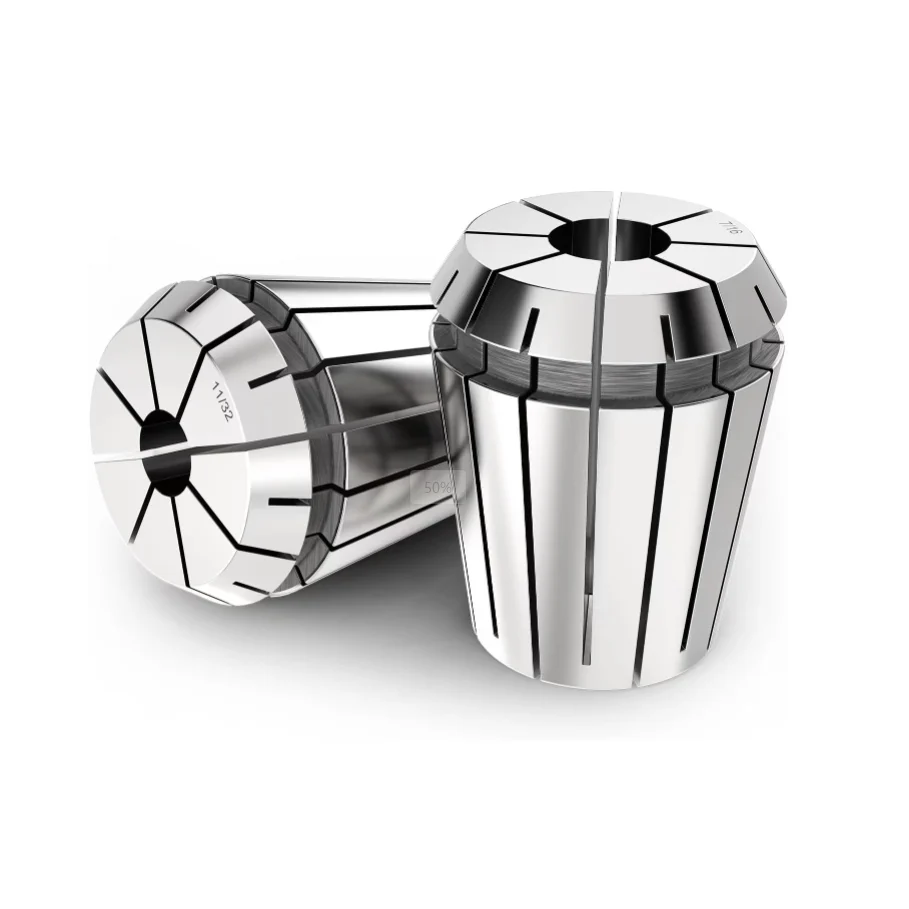
Precision Milling Demands and Runout Tolerances
When machining micro features in hardened mold steels or aerospace aluminum alloys, precision engineering teams quickly realize that spindle stability depends heavily on the holding interface. Executing high speed finishing operations with small diameter end mills requires flawless rotational accuracy because even microscopic radial deflection can cause premature cutter chipping or severe surface chatter. Traditional workholding components often fail to maintain uniform gripping force across the entire tool shank during high rpm operations. A high precision er collet provides uniform concentric clamping around the tool shank to absorb dynamic cutting forces while maintaining strict surface parallelism. Standard tool holders might suffice for heavy roughing passes where larger chip loads mask minor alignment errors, but fine finishing demands uncompromising concentricity. Precision shop floors upgrading to ultra accurate clamping systems report dramatic drops in micro chatter, improved surface roughness, and longer tool life. Choosing a properly ground er collet ensures that radial cutting forces distribute evenly across all flutes, maximizing tool performance during intricate contouring passes on complex geometries. Operational machinists who prioritize clamping concentricity when selecting an er collet consistently achieve higher part accuracy and fewer unprogrammed tool changes.
Concentricity Standards and Clamping Geometry
Achieving sub micron runout tolerances requires a clear understanding of how collet taper geometry interacts with the tool holder cavity during nut tightening procedures. High precision er collet designs utilize a sixteen degree taper angle alongside precision ground internal slots that collapse smoothly around solid carbide shanks. Premium manufacturing standards mandate thorough optical inspection using laser measuring machines to verify that internal bore geometry aligns perfectly with external taper surfaces. An ultra precision er collet maintains total indicator reading accuracy under two microns at four times diameter length, whereas standard commercial options exhibit five to ten microns of runout. When runout increases from two microns to ten microns, tool life drops by more than fifty percent because a single flute performs the majority of the metal removal work. Data from high speed machining trials confirms that tight tolerance er collet selection directly extends tool longevity while maintaining consistent chip load calculations. Mechanical engineers specifying tooling components for Swiss turn lathes and five axis machining centers always prioritize certified concentricity parameters when choosing an er collet for tight tolerance work.
High Speed Spindle Balance and Tool Life
Modern CNC machining centers operate at spindle speeds exceeding twenty thousand RPM, where centrifugal forces amplify any slight mass imbalance within the tool assembly. An unbalanced tool holder setup generates harmonic vibration that degrades expensive spindle bearings over time and leaves visible chatter marks across finished workpieces. Integrating a dynamically balanced er collet rated for G2.5 balance quality at twenty five thousand RPM minimizes rotational vibration significantly during ultra fast finishing passes. Aerospace manufacturing facilities cutting complex titanium components noticed a forty percent reduction in chatter marks after upgrading their finishing lines to a G2.5 rated er collet. The smooth rotational dynamics allow shop technicians to increase feed rates without exceeding surface roughness tolerances or risking cutter breakage. Furthermore, a balanced er collet reduces mechanical strain on high speed spindle components, lowering overall maintenance costs and avoiding unexpected machine downtime. Consistent dynamic balance ensures that fine finishing tools maintain stable cutting geometry throughout extended unattended machining shifts across automated production lines.
Material Heat Treatment and Surface Integrity
Long term clamping accuracy depends heavily on the metallurgical properties and heat treatment procedures used during component manufacturing. A high quality er collet is crafted from premium spring steel alloys such as 65Mn or high grade tool steel, hardened to fifty two to fifty six Rockwell C scale. Sub zero cryogenic treatment following vacuum heat treatment stabilizes the internal crystal structure, preventing gradual dimensional drift caused by thermal cycling during heavy cutting operations. Additionally, corrosion resistant coatings or specialized polish treatments keep clamping slots free from fine chip packing and coolant residue buildup over time. When contaminants build up inside an inferior er collet, clamping pressure becomes uneven, causing tool slippage, poor runout, or localized shank scoring. Quality audit reports from medical device manufacturers reveal that switching to a cryogenically treated er collet inventory reduced tool slippage incidents to near zero over twelve months of continuous production. Proper surface integrity ensures consistent collet collapse and repeatable tool changeover parameters across thousands of machining cycles.
Commercial ROI and Scrap Reduction Impact
While high precision tooling components require a higher initial investment, the financial returns realized through scrap reduction and process stability are substantial. Calculating total cost of ownership involves measuring tool wear savings, machine downtime reductions, and overall part pass rates across production runs. Facilities replacing bargain clamping options with a high precision er collet see an immediate reduction in scrapped workpieces caused by tool breakage or out of tolerance dimensions. For instance, a medical implant manufacturer reduced scrap rates from three point five percent to under zero point five percent simply by upgrading their er collet lineup. The cost savings from salvaged carbide end mills and reduced rework labor typically offset the collet investment within the first few weeks of operation. Investing in a reliable er collet protects valuable workpieces during high value finishing operations, delivering higher overall equipment effectiveness across automated machining cells and improving long term bottom line profitability.
Manufacturing Capabilities and Supply Chain Excellence
Selecting the ideal fixture platform and tool holding accessories requires partnering with an established manufacturer capable of delivering custom engineering support and reliable international fulfillment. Global industrial enterprises trust BLUESTAR for high performance tooling solutions engineered to meet demanding automated manufacturing specifications. Backed by advanced heavy machinery production facilities and rigorous quality control protocols, BLUESTAR delivers precision modular equipment and high accuracy er collet options designed for seamless integration with leading CNC machining platforms. Broad manufacturing capacities, robust material selection standards, and end to end export capabilities ensure that BLUESTAR provides dependable long term value for automated fabrication facilities worldwide. Machine shops seeking to optimize spindle throughput rely on BLUESTAR to deliver custom configured er collet solutions tailored to demanding technical requirements and specialized operational workflows.