
 EN
EN
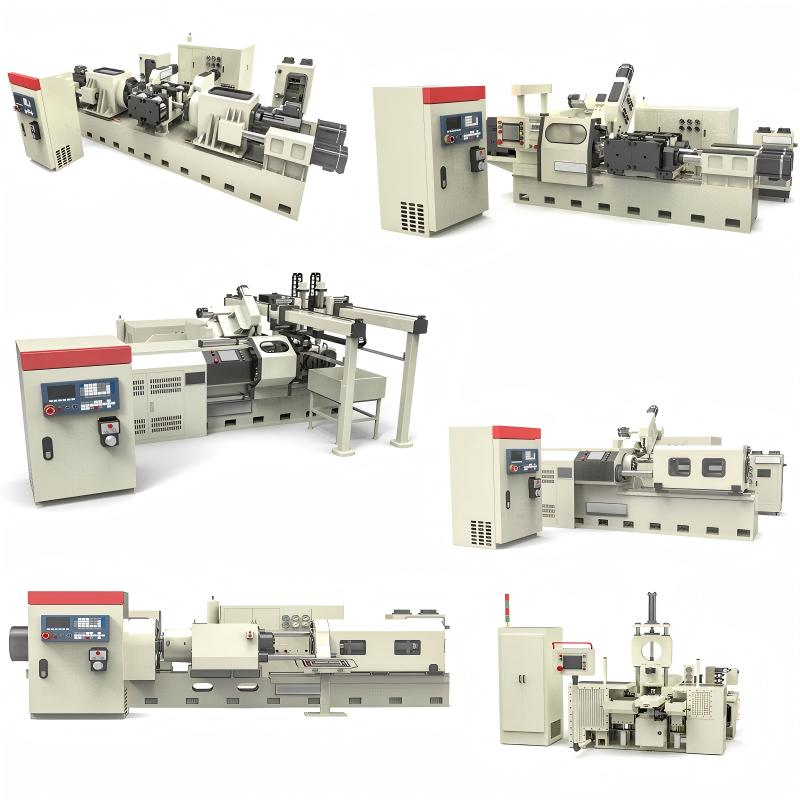
Assessing Workpiece Specifications and Size Requirements
Matching Bending Machine Capacity to Material Thickness and Size Limitations
When picking out a bending machine, getting the right tonnage for the material thickness is pretty much essential. Take stainless steel at 3mm thick - it needs about double or even triple the force compared to regular aluminum sheets of similar thickness. Most modern press brakes work well with metals ranging between 0.5mm all the way up to around 25mm thick. But push past what the machine can actually handle and things start going wrong fast. Tools get damaged, parts end up misshapen, and nobody wants that mess. According to recent research published last year by sheet metal experts, roughly one third of all bending issues come down to simply using the wrong combination of machine power and material type.
Evaluating Bending Length and Capacity Requirements for Optimal Performance
Workpiece length directly impacts machine selection. Machines with 3m bending lengths suit small-batch jobs, while industrial models support up to 10m for structural components. Undersizing causes inconsistent bends, while oversizing wastes energy—hydraulic press brakes consume 15% more power when operating below 60% capacity (Ponemon 2023).
Impact of Workpiece Specifications on Tooling Compatibility and Costs
Complex geometries often require custom punches and dies, which account for 18–22% of total bending costs. Narrow V-dies (6–12x material thickness) improve precision but limit material versatility. Research from fixturing studies shows adjusting workpiece dimensions by ±5% can reduce tooling expenses by 15% while maintaining bend quality.
By aligning material specs, machine capabilities, and tooling design, manufacturers achieve 1.5mm/m bend consistency while lowering per-part costs by up to 30%.
Comparing Types of Bending Machines: Manual, Hydraulic, and CNC
Overview of Bending Machine Types and Their Core Applications
Manufacturing today generally works with three main types of bending machines, each designed for different kinds of work situations. The manual press brake is pretty straightforward stuff, great for small shops doing prototypes or running low volume jobs. These require skilled hands since getting within half a millimeter accuracy depends on how good the operator is. Then there are hydraulic machines which most fabricators rely on for everyday work. They come in sizes from around 20 tons all the way up to over 300 tons, handling steel plates between 3mm and 12mm thick at rates of about 12 bends per minute. For those really complicated shapes needed in places like airplane factories or car assembly lines, CNC systems take center stage. These computer controlled units can repeat bends down to just 0.1mm difference every time they run through their programmed instructions for cutting and forming metal parts.
Hydraulic vs. Electric Press Brakes: Efficiency, Maintenance, and Precision
Hydraulic systems work by using oil pressure to bend thick materials like 10mm stainless steel, but they actually use about 15 to 20 percent more energy compared to electric systems. Electric machines with servo drives save around 60% on energy according to some studies from Aoxuanme in 2023, plus they can do bends much quicker, sometimes as fast as 20 per minute. The downside? These electric models typically handle materials between 50 and 150 tons, so thicker stuff becomes tricky. When it comes to maintenance expenses, there's a big difference too. Hydraulic machines need regular filter and oil changes costing roughly $2,000 each year while electric ones just need belt and servo inspections that run about half that price at $500 annually.
| Factor | Hydraulic | Electric |
|---|---|---|
| Energy Efficiency | 70-80% | 90-95% |
| Operating Cost/Year | $2,200 | $1,100 |
| Ideal Material | Thick alloys | Thin-gauge metals |
Advantages of CNC Control and Automation in Complex Bending Jobs
CNC bending machines reduce setup times by 83% (Made-in-China 2023) through automatic tool changers and angle compensation algorithms. For a curved architectural panel requiring 17 unique bends, CNC systems complete the task in 22 minutes versus 2.5 hours manually. Real-time laser sensors adjust crowning deflection mid-bend, maintaining ±0.25° angular consistency across 500+ workpieces.
High Initial Cost of CNC Machines vs. Long-Term ROI
While CNC press brakes demand $150,000–$450,000 upfront (3–5 hydraulic costs), they yield 35–50% labor savings in high-mix production. A 2023 ROI study by industrial automation analysts found CNC operators achieve payback in 18–26 months when processing 1,200+ monthly parts. Hybrid solutions like CNC-assisted hydraulic brakes bridge this gap, offering 80% of full-CNC precision at 40% lower investment.
This section references data from Comprehensive Bending Machine Classification and ROI Analysis in Automation.
Ensuring Precision and Accuracy in Bending Processes
Machine Accuracy: CNC vs. Manual Options for High-Tolerance Production
Computer Numerical Control machines can hit around plus or minus 0.1 millimeter repeatability when running in actual production settings. These machines beat manual systems hands down when it comes to angular consistency, with studies from precision engineering showing they perform about 87 percent better than traditional methods back in 2023. Manual press brakes need skilled operators just to get basic bends right, but CNC systems keep their angle deviations below half a degree even after tens of thousands of cycles thanks to those servo driven axes. When making parts for aircraft or medical devices where tolerances matter so much, this kind of accuracy means no more expensive rework caused by parts slowly drifting out of spec over time.
Deflection and Crowning System Compensation in Precision Bending
Modern hydraulic systems automatically adjust ram pressure and bolster alignment to counteract deflection—a critical factor when bending stainless steel over 3m lengths. For example, 12mm thick aluminum sheets require ~18% less crowning compensation than carbon steel due to lower elastic modulus, highlighting the need for material-specific calibration.
Real-Time Monitoring and Precision Adjustments in Modern Bending Machines
Laser measurement sensors now provide micron-level feedback during bending cycles, enabling closed-loop adjustments that reduce springback errors by 34% compared to open-loop systems. This proves vital when forming complex geometries like turbine blade housings, where angle deviations exceeding 0.25° compromise aerodynamic efficiency.
Data Point: Advanced CNC press brakes achieve ±0.1mm positional repeatability across all axes (International Press Machinery Standards, 2023).
Aligning Bending Techniques and Automation with Production Needs
V-bending, U-bending, air bending, and bottom bending: A comparative analysis
Sheet metal fabrication relies heavily on four main bending methods. V-bending works with a punch and V-shaped die to create those standard right angle bends we see everywhere. For things like electrical boxes and enclosures, manufacturers often turn to U-bending which forms those nice rounded channels. Air bending is becoming popular too since it needs just about 20% of what traditional methods require in terms of tonnage. This technique forms angles without the punch making full contact with the die, and according to recent industry data, this cuts down on springback issues by somewhere between 15 and 25 percent compared to when using bottom bending techniques. Bottom bending does give better precision though, albeit at a cost. It takes roughly 30 to 50 percent more force than air bending, which means parts of the bending machine's hydraulic system tend to wear out faster over time.
Selecting the right bending technique based on precision and complexity
Thin-gauge aluminum parts (<2mm) benefit from air bending’s flexibility, while heavy-duty stainless steel components (>6mm) often require bottom bending for dimensional stability. For complex geometries like multi-angle aerospace brackets, CNC press brakes with adaptive angle correction systems reduce rework by 40% in high-tolerance (±0.5°) applications.
Air bending advantages: Flexibility and reduced tooling wear
By minimizing tool contact, air bending decreases die wear by 20–30% compared to traditional methods. This technique accommodates varying material thicknesses (0.5–12mm) without requiring die changes, making it ideal for mixed-production environments. Recent studies show manufacturers using air bending report 18% faster setup times and 12% lower per-part tooling costs.
Press-braking vs. panel bending for high-volume manufacturing
While CNC press brakes dominate small-batch prototyping, automated panel bending systems achieve 3× faster cycle times in high-volume production of cabinet components and appliance panels. A 2023 comparison found panel benders reduced material handling time by 65% through integrated clamping and positioning systems, though initial costs remain 40–60% higher than conventional press brakes.
Modern adaptive bending systems now combine AI-driven springback prediction with real-time laser measurement, achieving ±0.1mm accuracy across 500+ consecutive bends—critical for automotive and aerospace manufacturers requiring Six Sigma-level consistency. This automation integration enables manufacturers to shift between short-run custom orders and large-scale production without recalibration downtime.