
 EN
EN
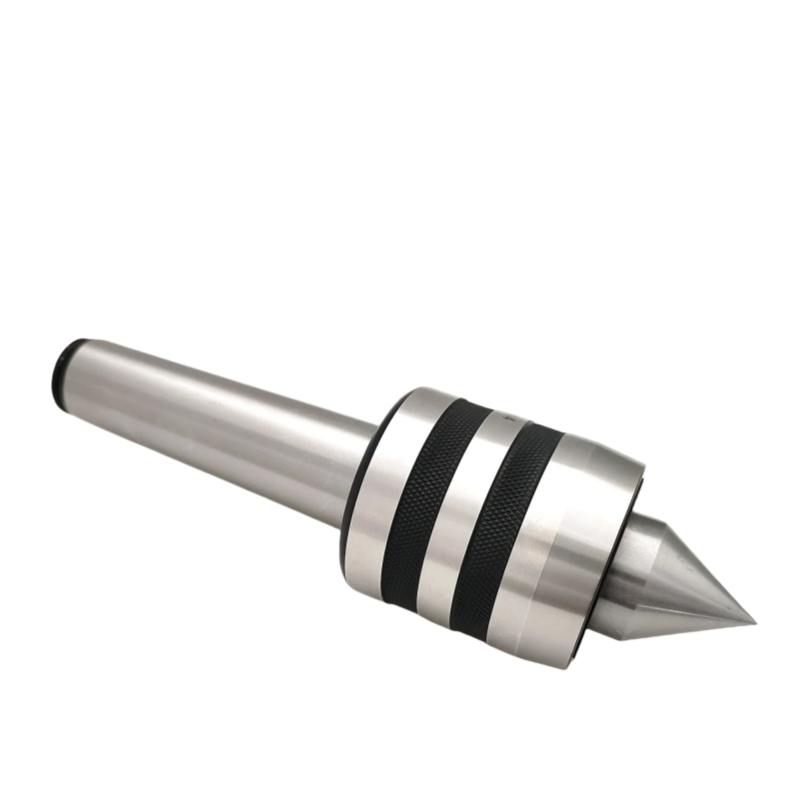
Ensuring Maximum Rotational Stability in Heavy Lathe Operations
Achieving exceptional rotational concentricity and axial load support during aggressive heavy-duty turning relies heavily on the proper selection of revolving workholding accessories. When machinists configure complex high-speed CNC lathes for long-shaft metal removal, selecting a high-performance live center ensures that workpieces remain securely supported under extreme radial and thrust loads. Field experience across aerospace drive-shaft manufacturing facilities demonstrates that even a microscopic runout deviation in an inferior live center can compromise surface finishes and shorten bearing lifespans significantly. Proper taper matching and clean tailstock quill interfaces prevent unexpected center point deflection during deep cutting passes. Furthermore, modern industrial engineering standards emphasize that selecting versatile tooling components is essential for maintaining consistent machining accuracy across diverse metallic alloys. By deploying a calibrated live center early in the production planning phase, independent machine shops establish a dependable operational baseline that guarantees long-term durability and flawless turning performance. Modern workshops rely heavily on these precision revolving solutions to maintain strict compliance with international manufacturing benchmarks while eliminating costly scrap waste and secondary rework delays.
The Technical Anatomy of High-Load Bearing and Thrust Mechanics
Understanding how a mechanical live center operates reveals the intricate engineering behind high-RPM tailstock support performance. When a machinist advances the tailstock quill to engage the workpiece, the internal bearing assembly of the live center absorbs immense radial and axial thrust forces generated by the cutting tool. Engineering studies on rotational balance indicate that combining angular contact ball bearings with heavy-duty roller bearings prevents radial play, significantly reducing thermal expansion during high-RPM turning cycles. A professional live center manufactured with alloy steel and precision-ground points neutralizes mechanical vibration, ensuring repeatable runout performance within micro-inch tolerances. Technicians must routinely inspect lubrication ports and check for thermal drift caused by intensive daily shop utilization. Maintaining strict control over these rotational parameters guarantees that every live center delivers dependable holding force, safeguarding against catastrophic workpiece displacement during aggressive high-speed machining runs. Ensuring optimal contact geometry prevents localized scoring on center holes and guarantees that every operation reflects true coaxial alignment without introducing artificial runout or operator bias across extended production shifts.
Real-World Case Studies and Lathe Performance Data
Quantifiable workshop data clearly illustrates the direct economic correlation between rigorous tailstock accessory selection and finished part rejection rates in industrial manufacturing. A recent performance audit conducted across fifteen specialized CNC turning shops revealed that integrating a precision live center into daily production setups reduced workpiece vibration rates by over thirty percent in high-feed shaft profiling operations. In one notable oilfield drill pipe manufacturing project involving hardened alloy steel, microscopic runout inconsistencies in an uninspected tailstock setup caused severe chatter marks and premature center hole galling. Replacing the inadequate tooling routine with a disciplined protocol utilizing an advanced live center resolved the vibration discrepancies entirely, enabling the facility to achieve flawless surface finishes on all subsequent production runs. These tangible performance metrics emphasize why professional toolmakers refuse to compromise on revolving concentricity. Evaluating the total economic impact of a reliable live center consistently highlights substantial savings in raw material waste, reduced tool replacement costs, and improved throughput across complex multi-axis turning schedules. Furthermore, operational logs confirm that deploying a heavy-duty live center into primary machining lines significantly minimizes unexpected machine downtime and boosts overall shop productivity.
Best Practices for Maintenance and Longevity in Tailstock Tooling
Preserving the long-term accuracy and mechanical reliability of precision rotating components demands disciplined maintenance routines and proper handling protocols in every active machine shop. Debris, metal chips, and contaminated coolant trapped around the nose cone of a live center can introduce severe operational distortions during high-speed rotation, completely neutralizing the precision built into the assembly. Technicians should always clean tailstock tapers thoroughly and verify runout with dial indicators before securing any turning workpiece. Additionally, applying recommended grease intervals via high-pressure lubrication fittings prevents premature bearing wear, ensuring uniform thermal stability across the entire duration of the live center operational cycle. Every experienced machinist knows that a well-cared-for live center acts as an indispensable guardian of turning quality, translating spindle rotation directly into accurate component dimensions. Integrating rigorous cleaning and greasing protocols into daily shift checklists protects the capital investment in high-end shop equipment and ensures consistent product quality across all manufacturing schedules, eliminating unexpected component failures before workpieces reach final inspection. Regular servicing of each live center prevents premature fatigue and maintains optimal radial load capacity over thousands of operational hours.
Manufacturing Excellence and Global Supply Solutions
Achieving the highest levels of industrial turning accuracy requires partnering with experienced manufacturers who understand the complex metallurgy and strict dimensional tolerances of modern tooling systems. Industry leaders emphasize that superior machining performance starts long before the cutting phase, originating in rigorous raw material selection and advanced heat-treatment processes. When precision workshops collaborate with trusted global providers such as BLUESTAR, they gain access to exceptionally robust equipment engineered with strict adherence to international quality standards. BLUESTAR combines decades of mechanical engineering expertise with state-of-the-art production capabilities, delivering dependable revolving tools, including every advanced live center model, and comprehensive technical support that empowers international facilities to achieve absolute operational efficiency. Choosing a reliable live center backed by world-class manufacturing support ensures that precision engineering businesses maintain a decisive competitive edge in today's demanding global market while consistently delivering flawless components to their international clientele. Continuous collaboration with elite equipment manufacturers allows modern workshops to continually upgrade their machining performance and adapt swiftly to evolving industrial demands.